île Saint-Denis (FR)
Cultural
Arts center
Exhibitions
Studios + fab-lab
Artists’ studios
new construction
Completion, 2024 olympic game Paris 2024
Completion, 2026 arts center
nominee, équerre d’argent 2024
SHORT-LIVED ATHLETES’ VILLAGE THEN ARTS CENTRE
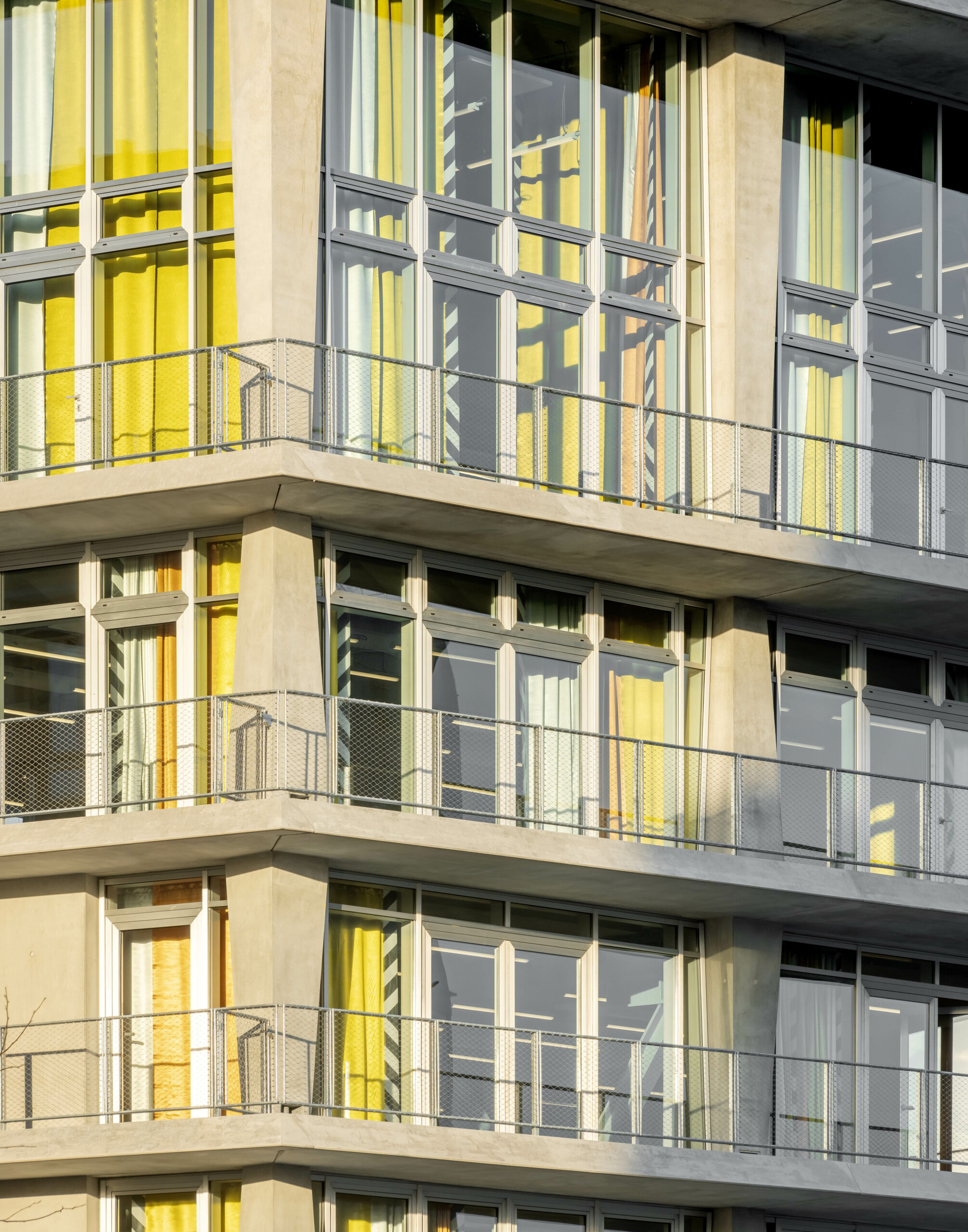
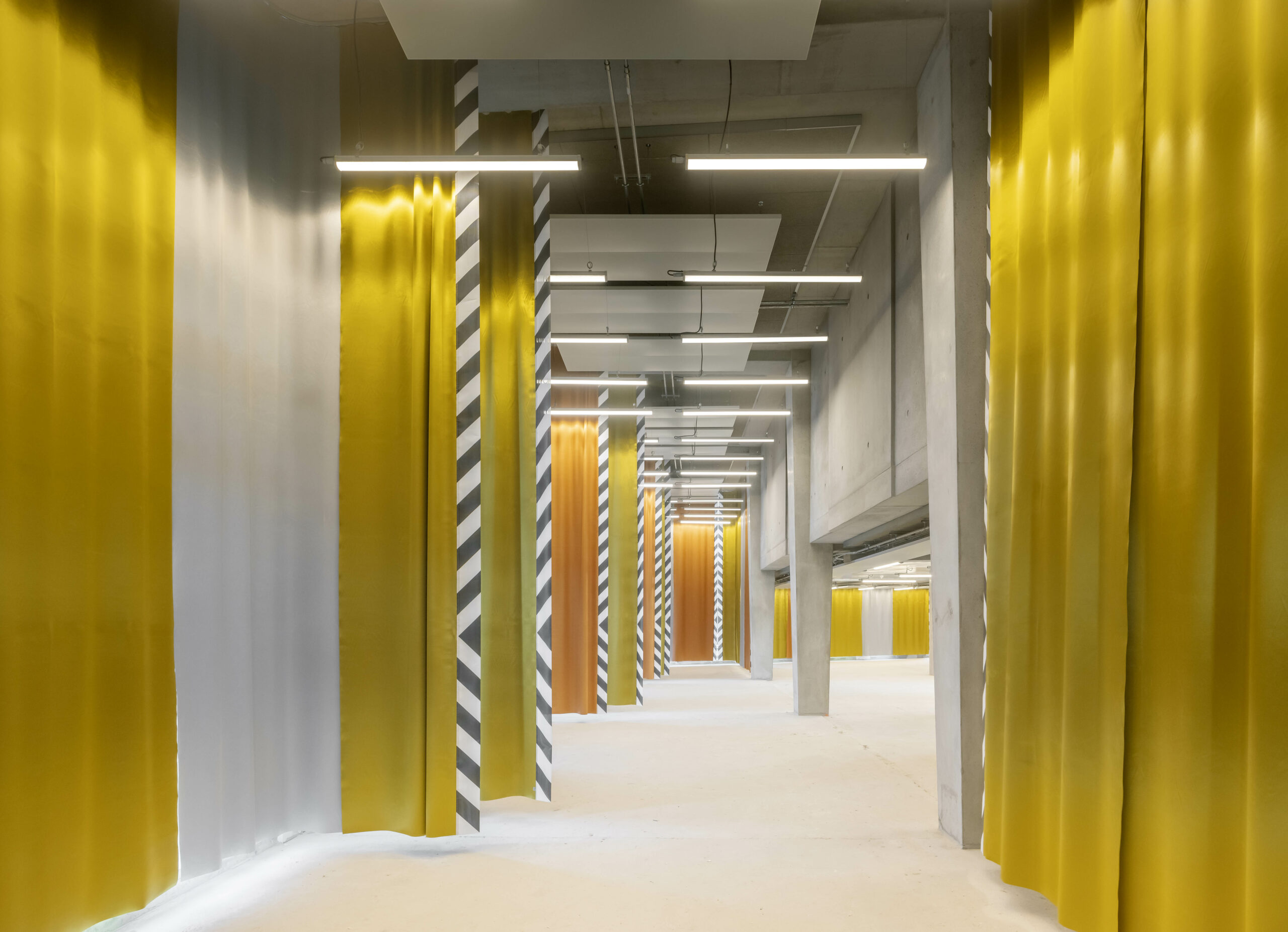
Olympe
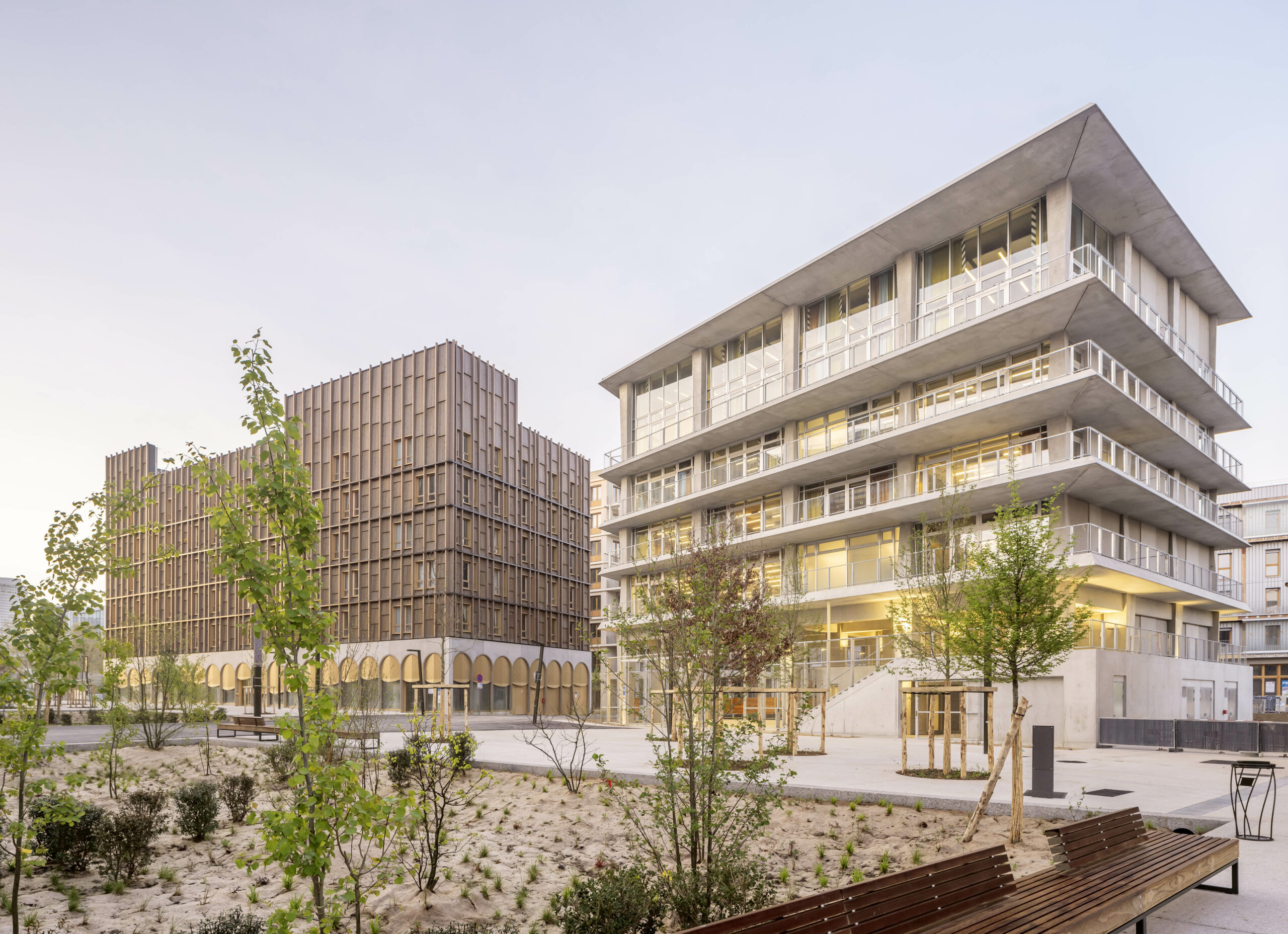
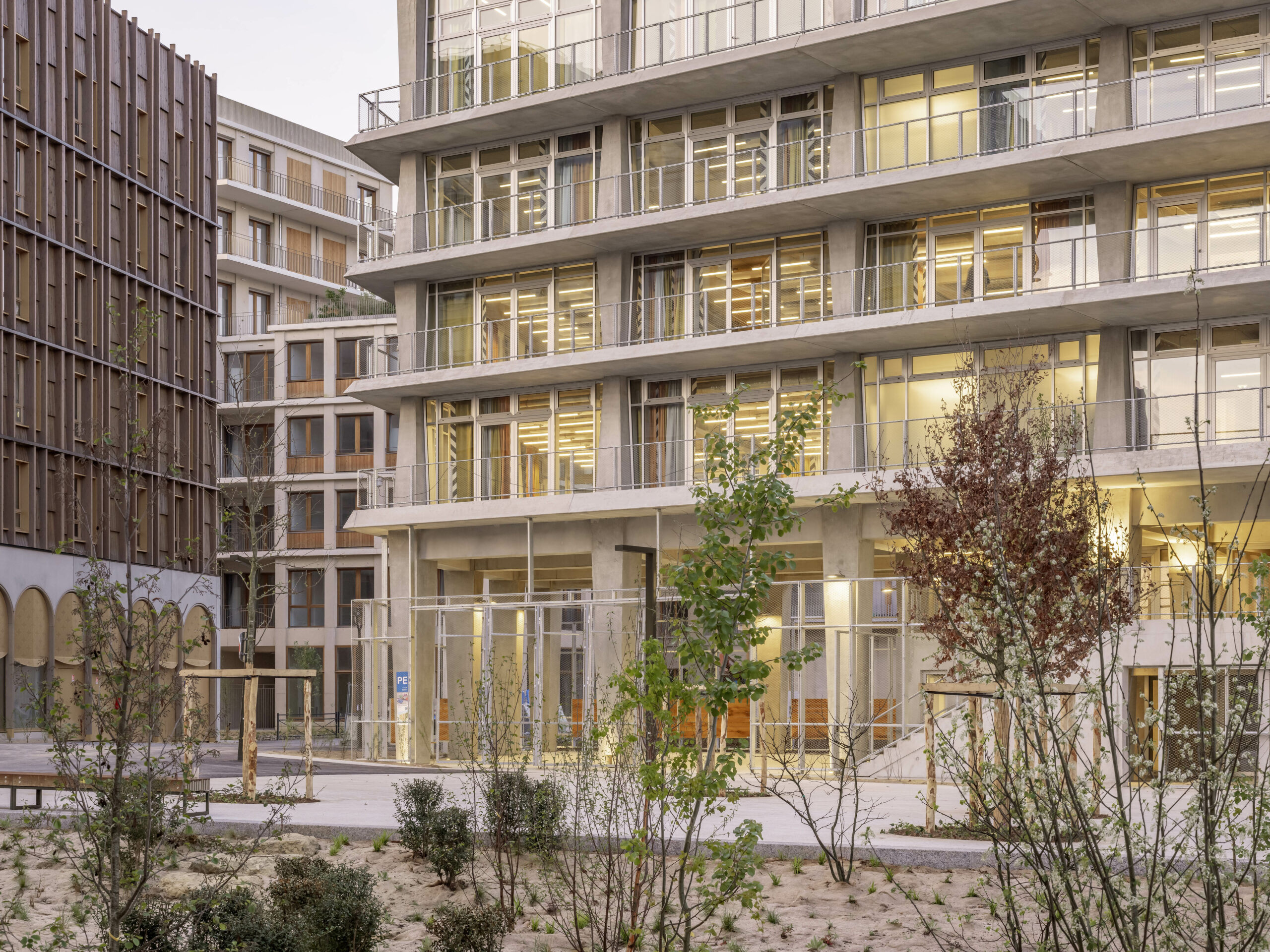
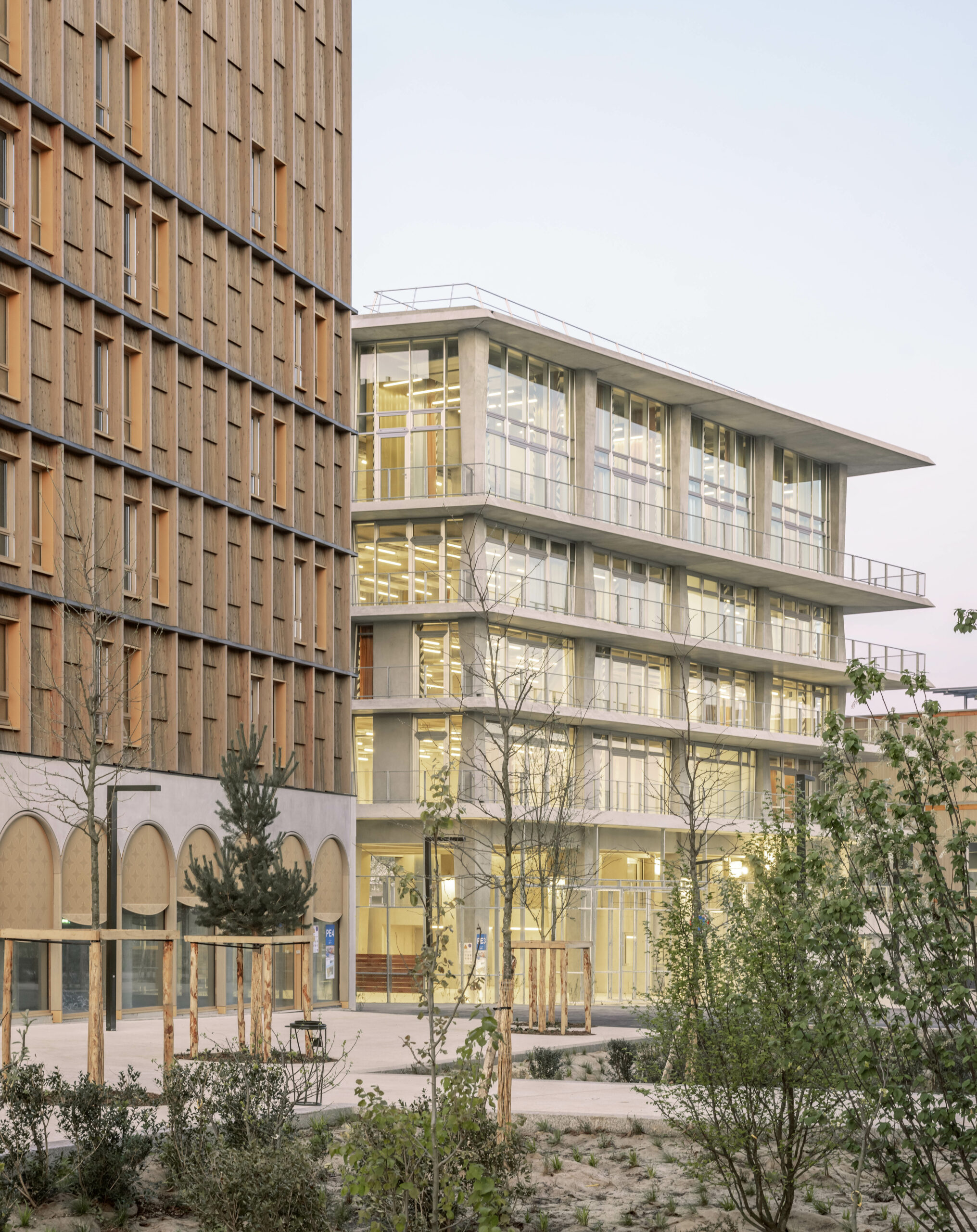
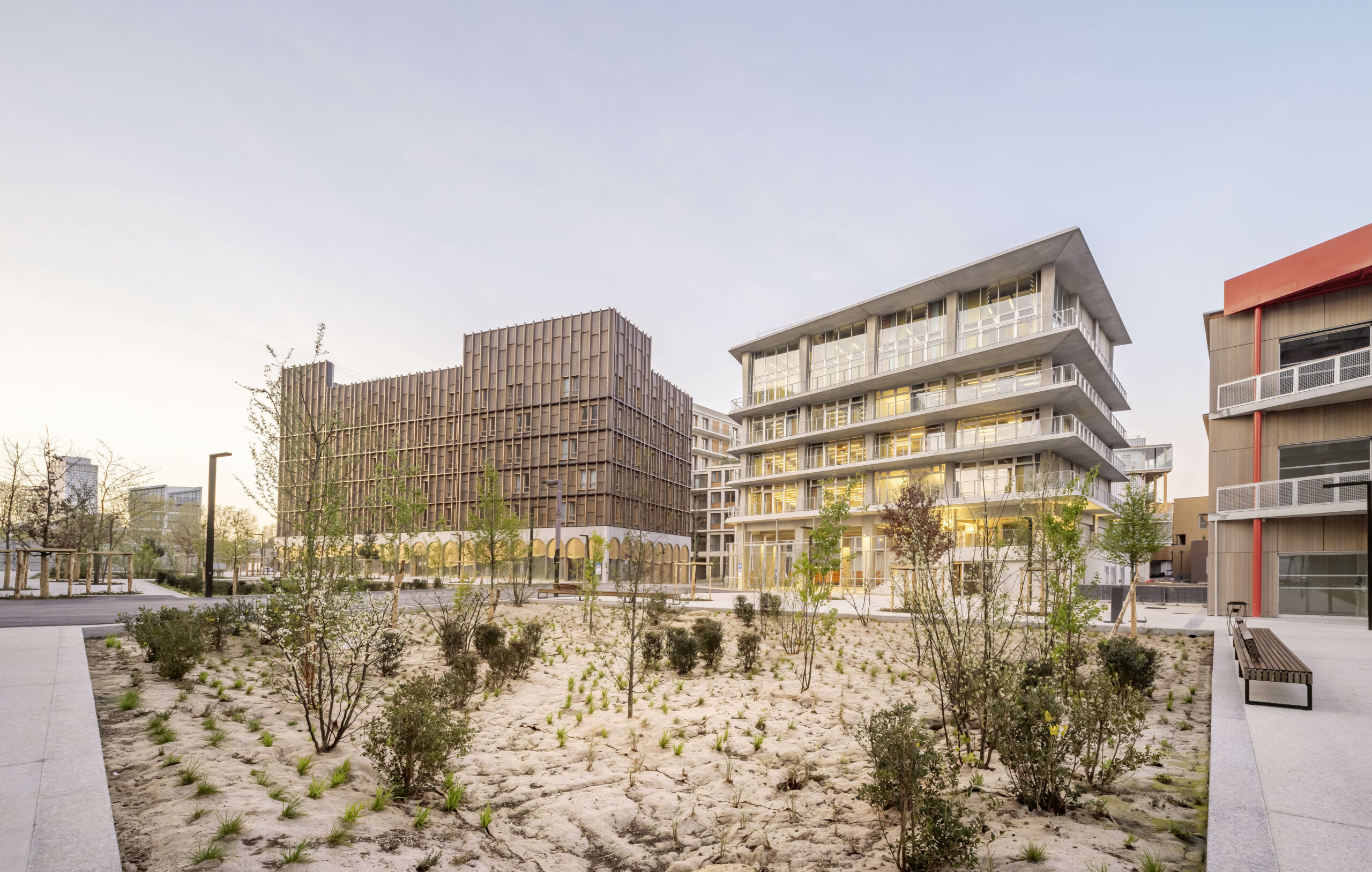
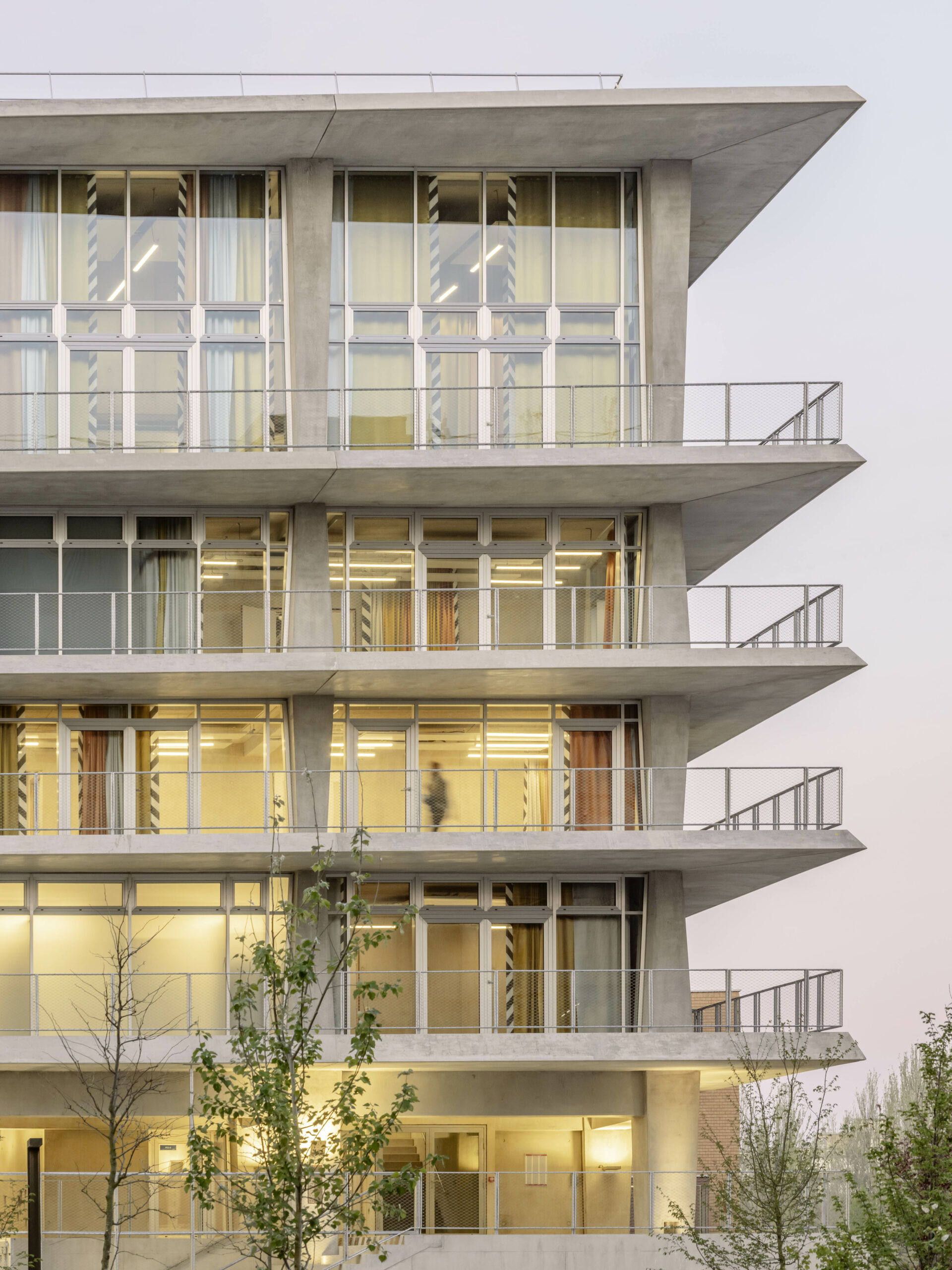
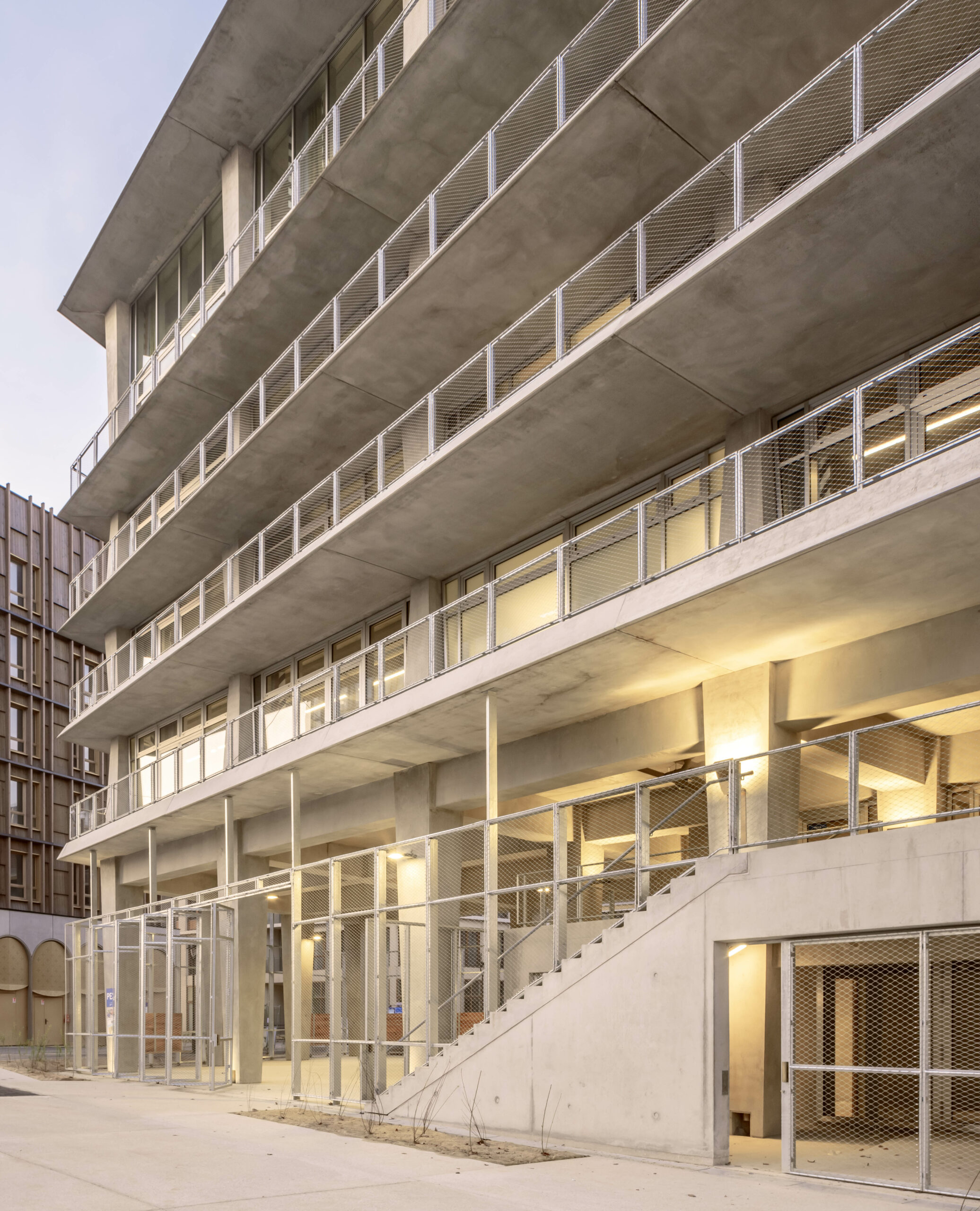
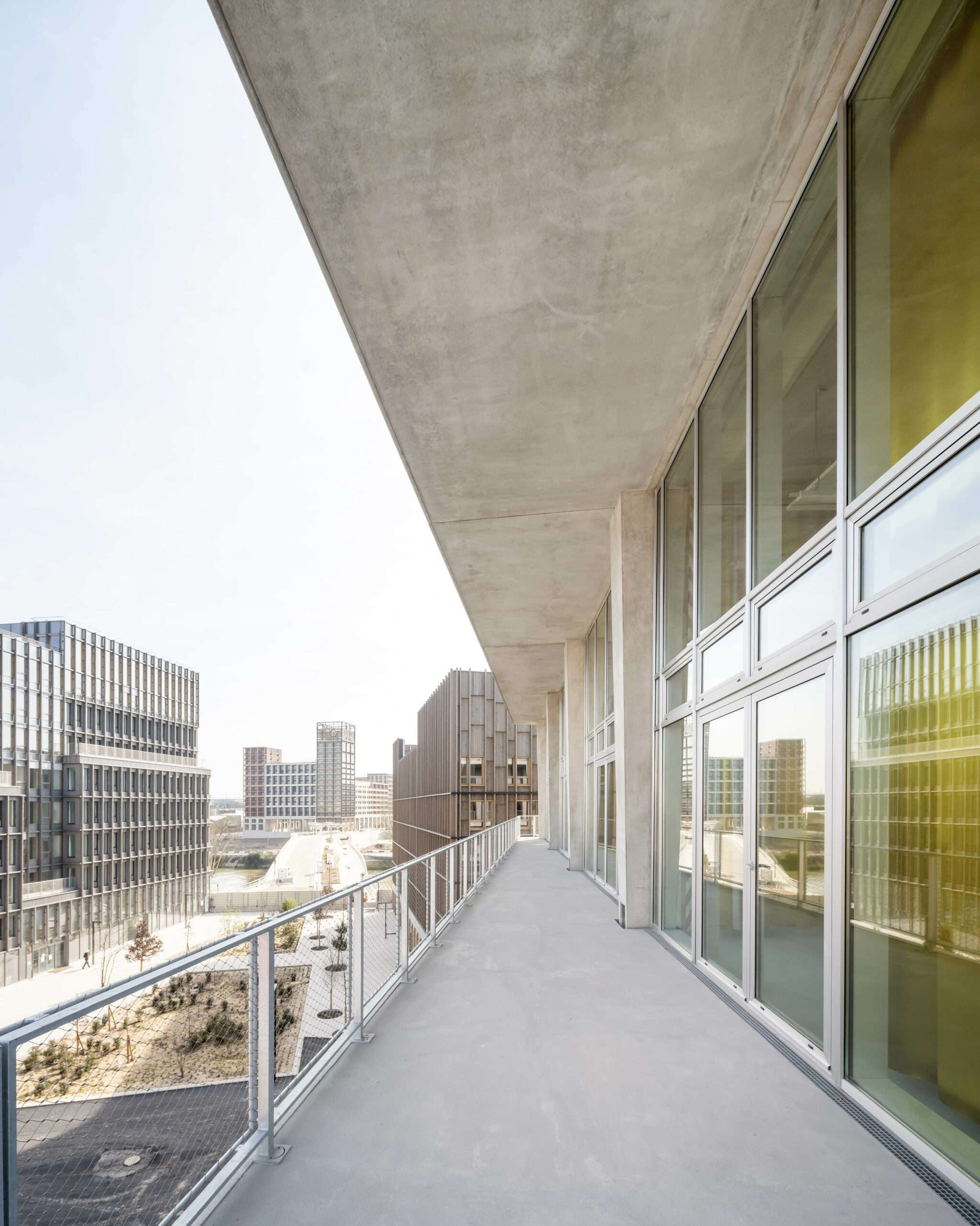
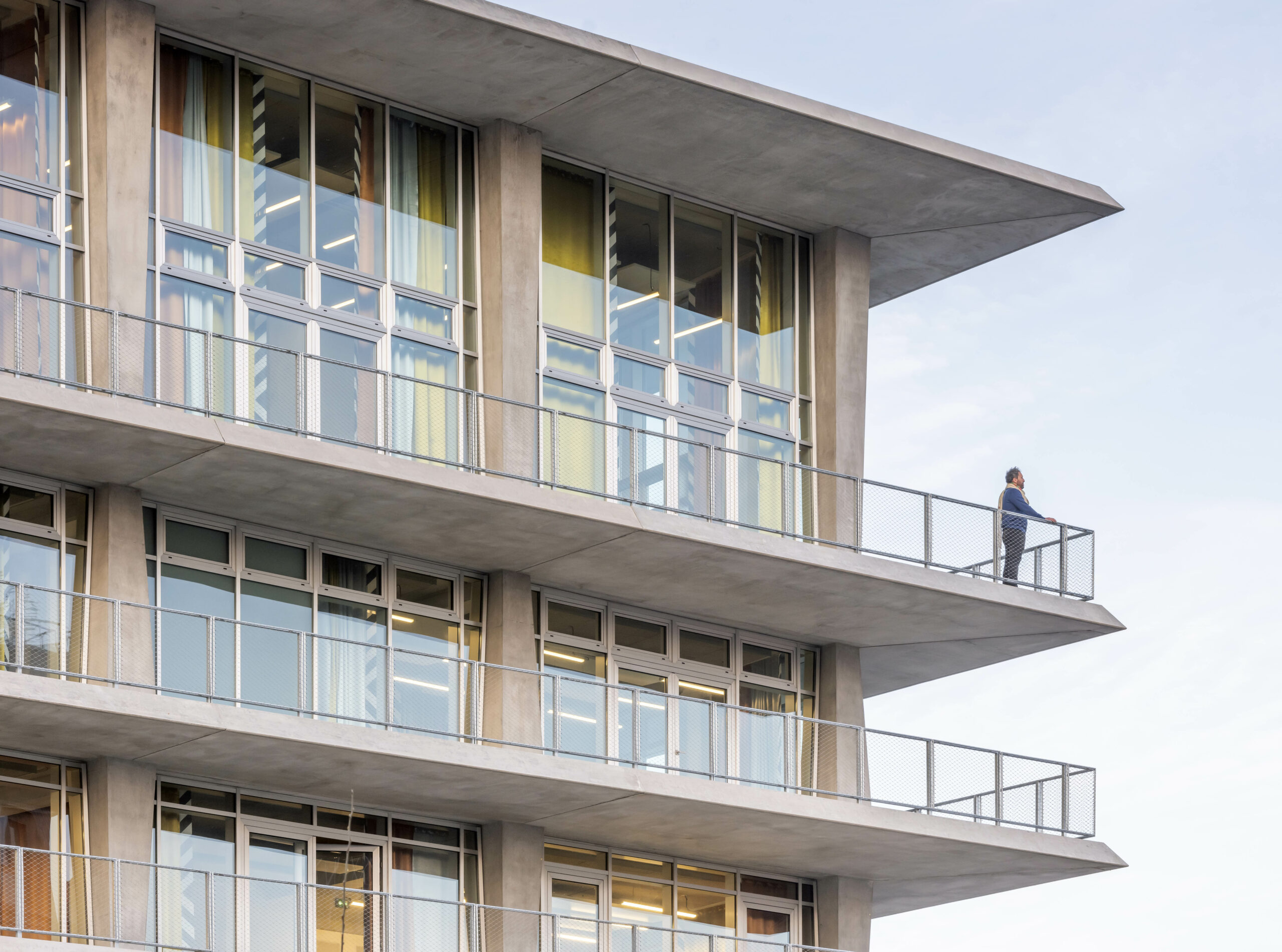
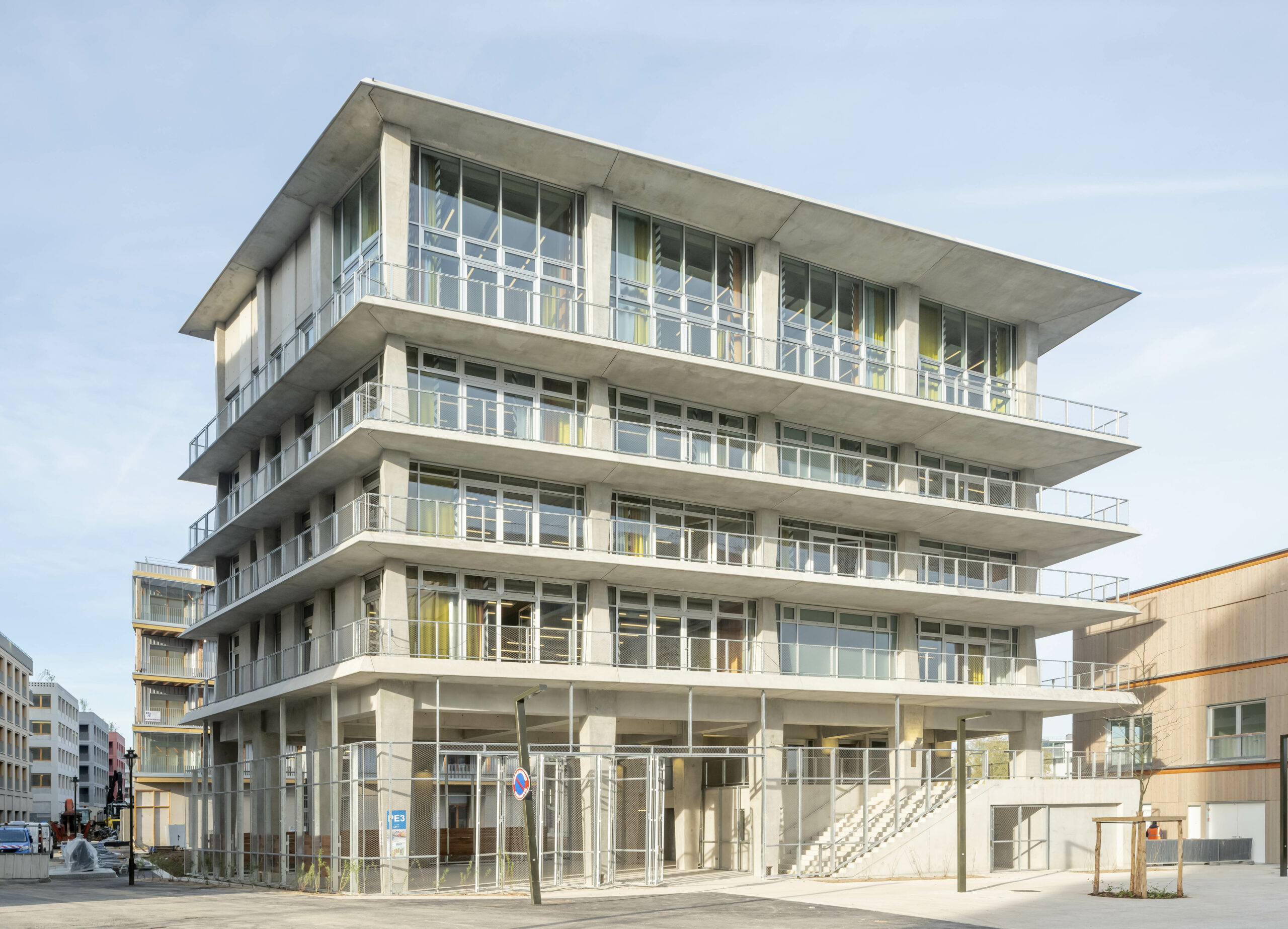
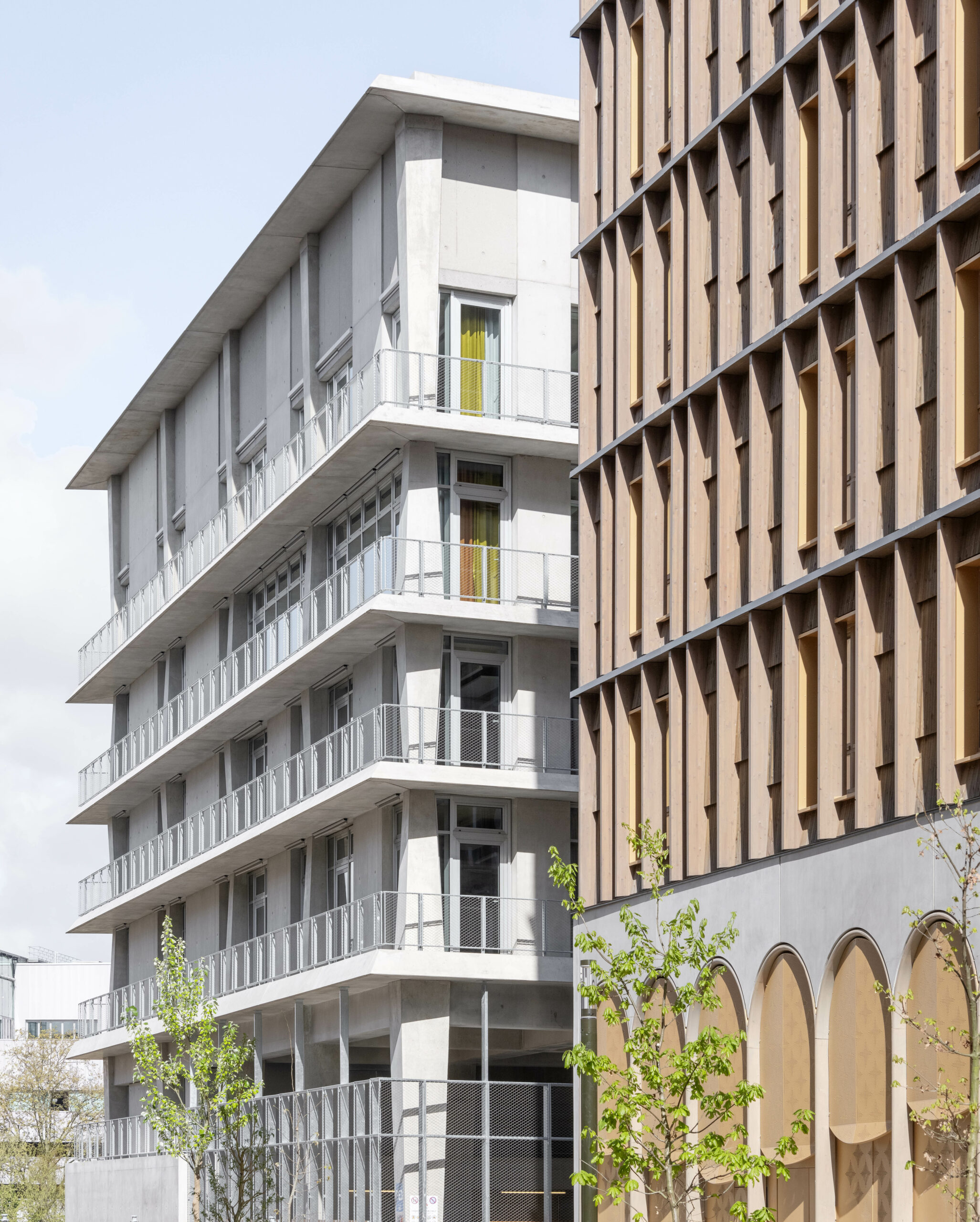
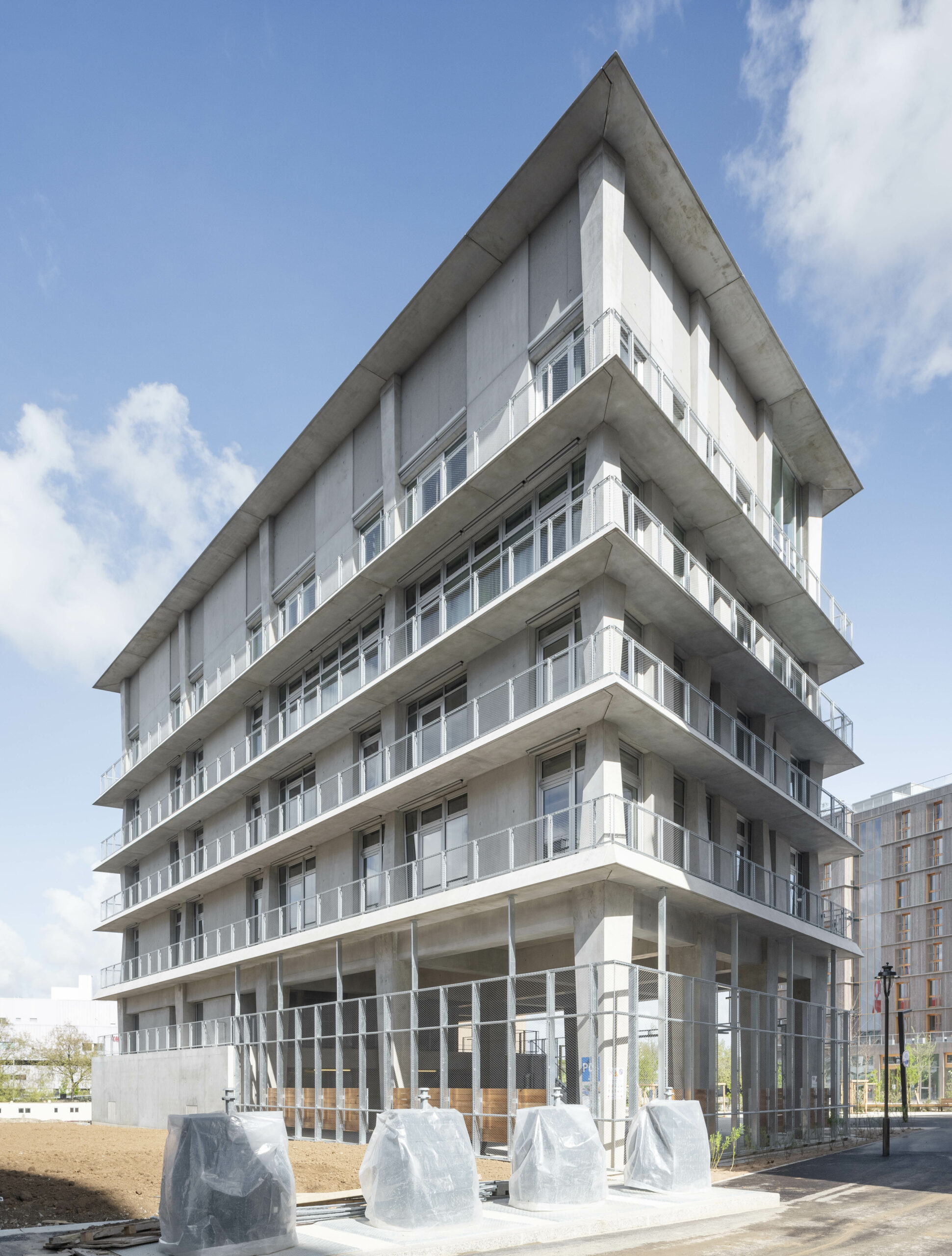
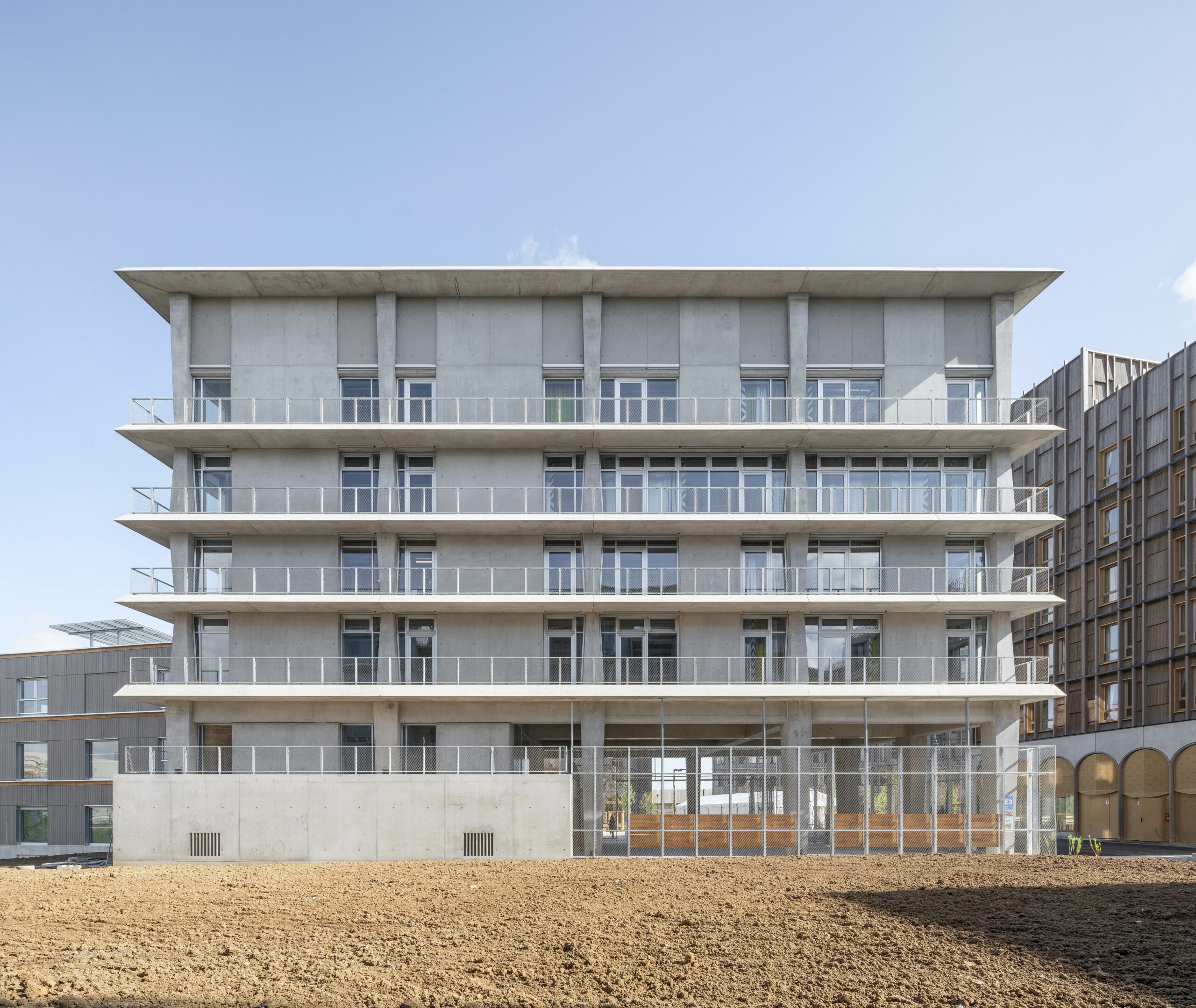
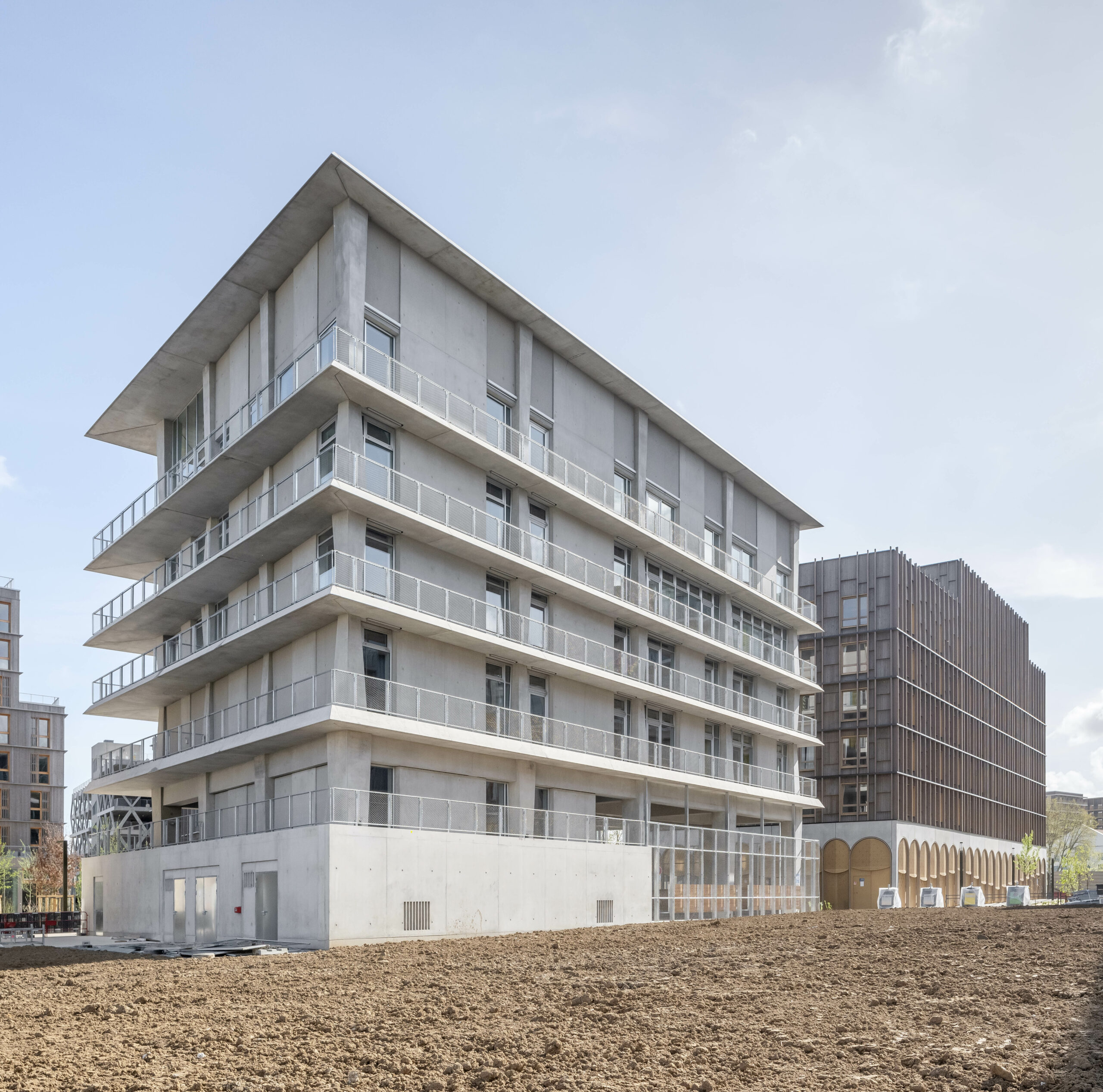
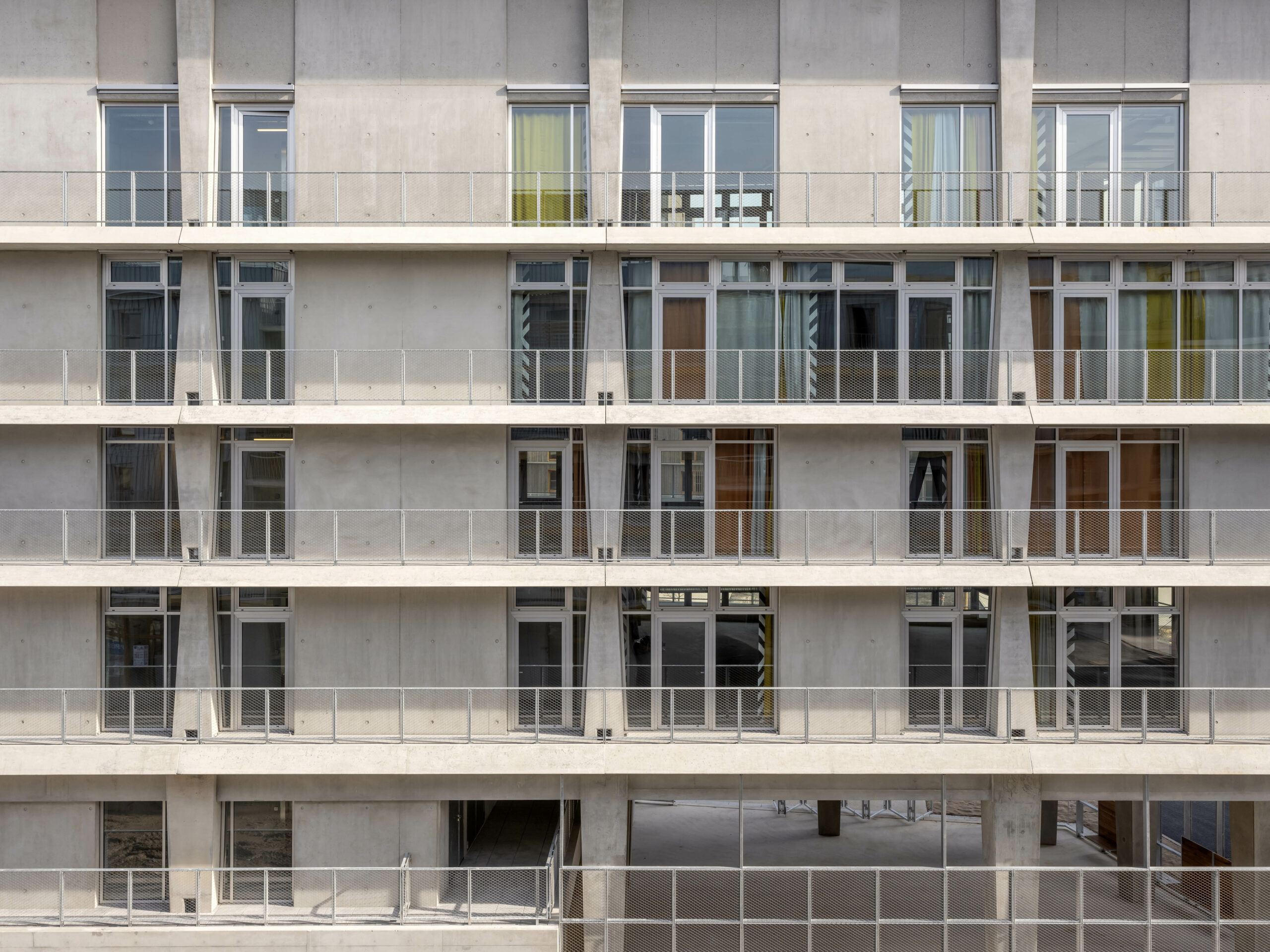
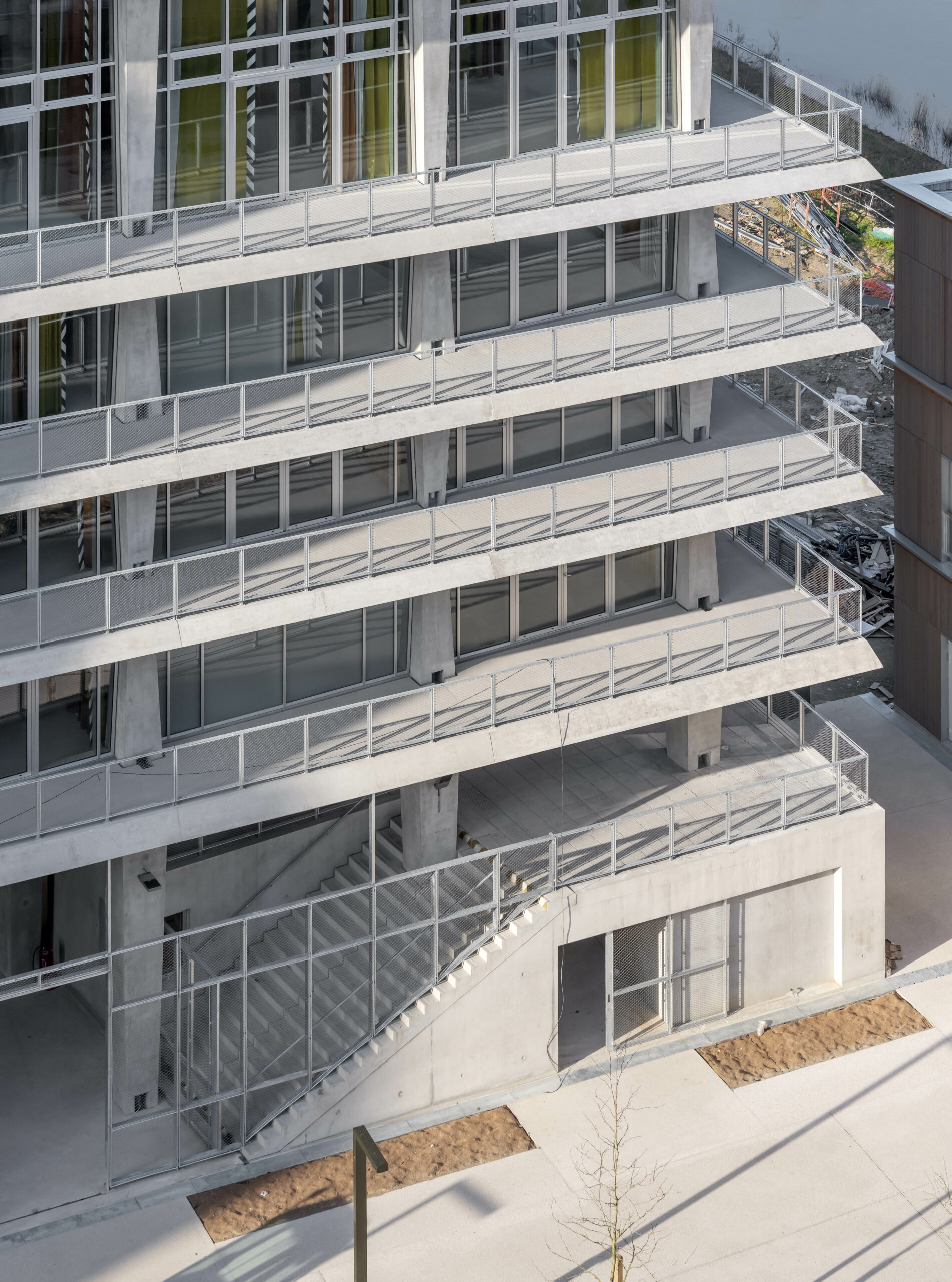
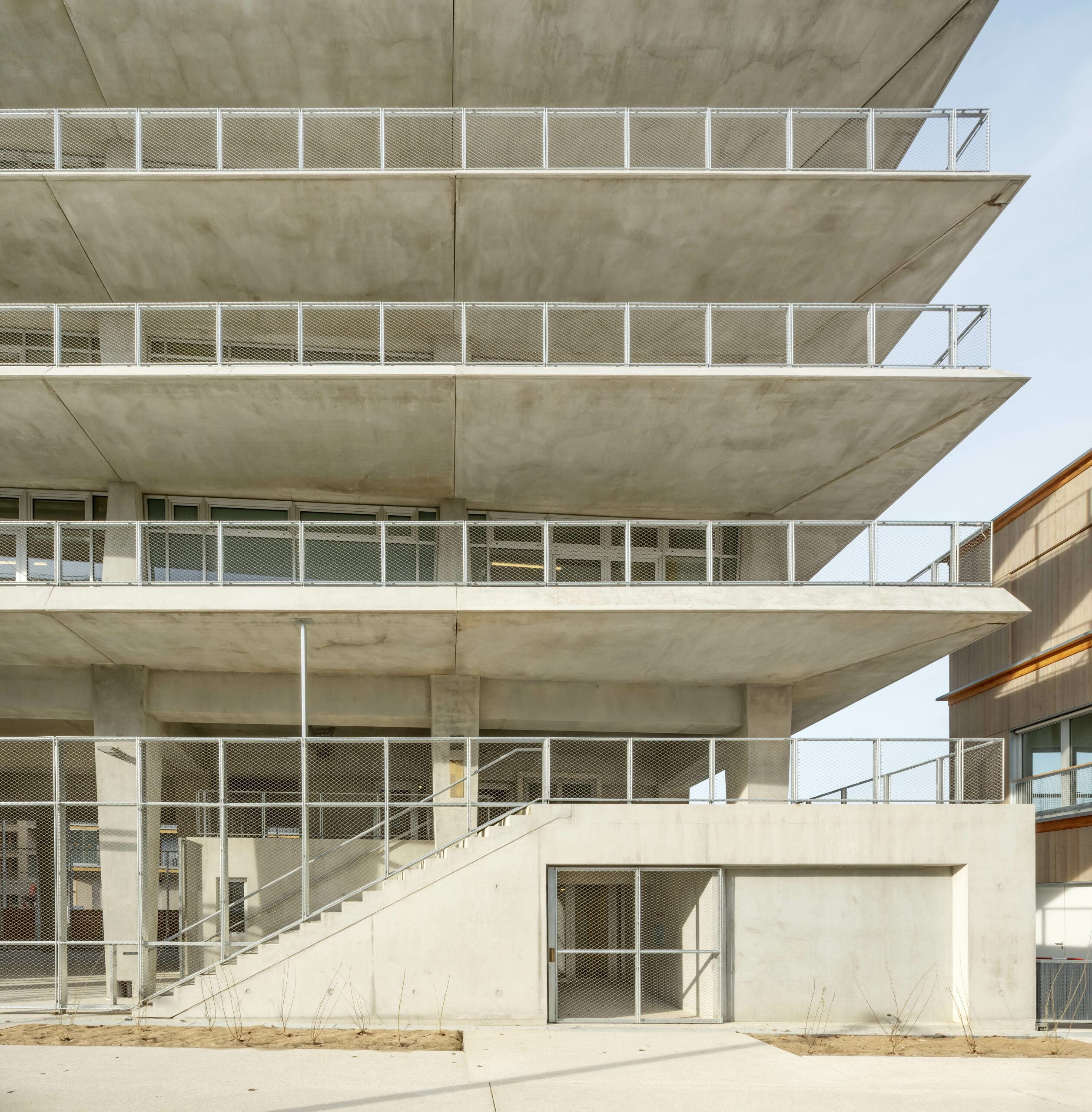
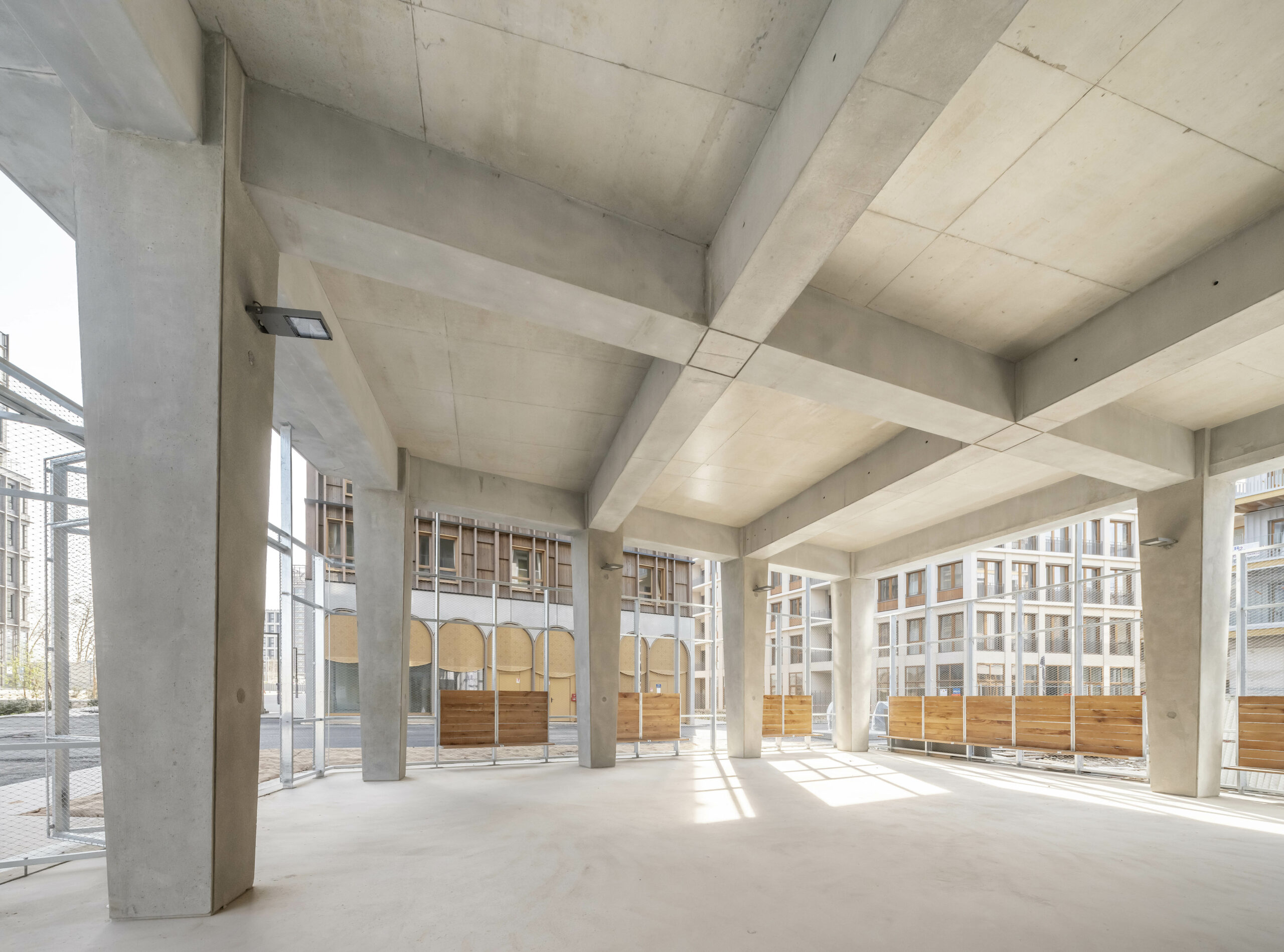
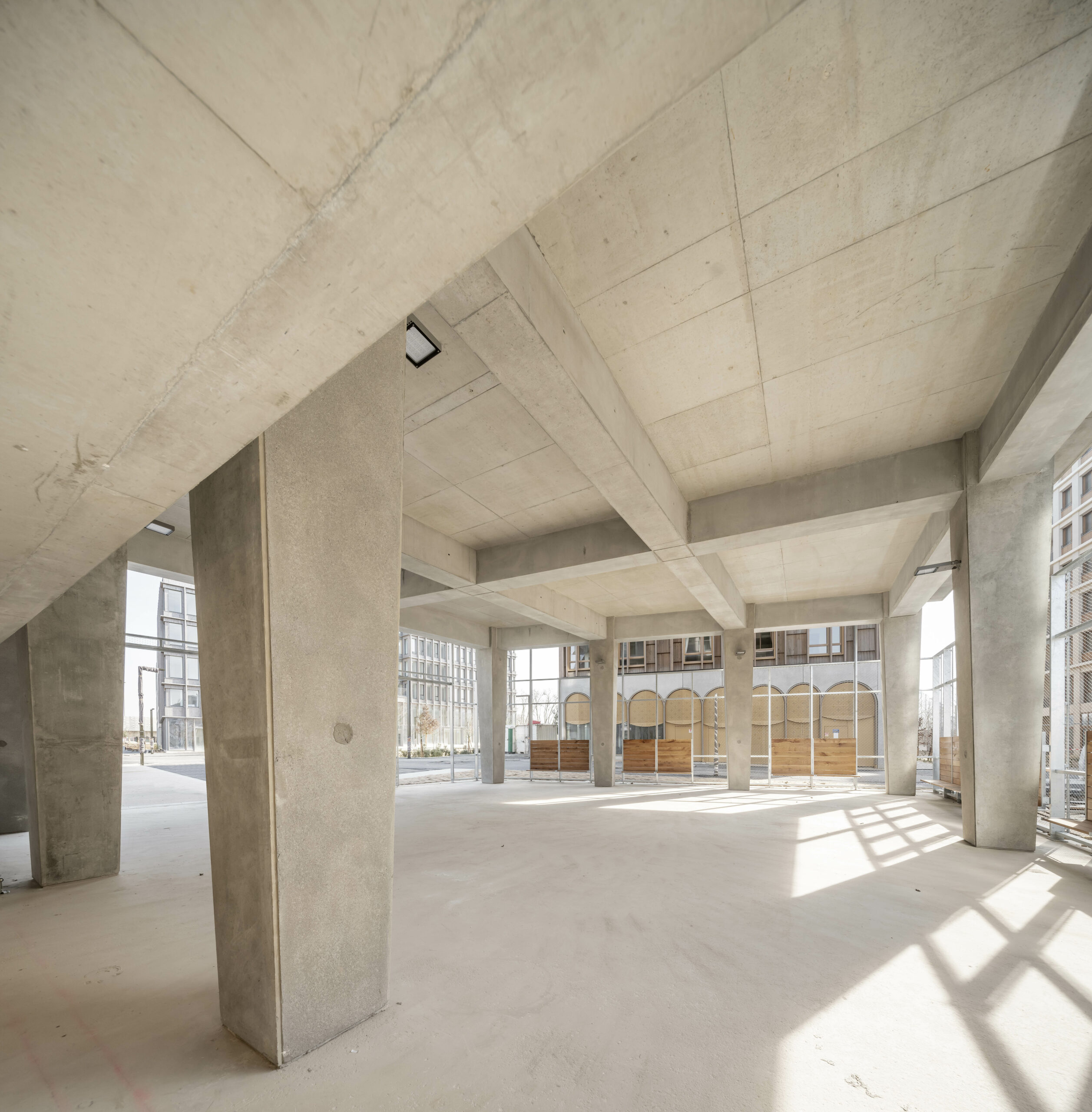
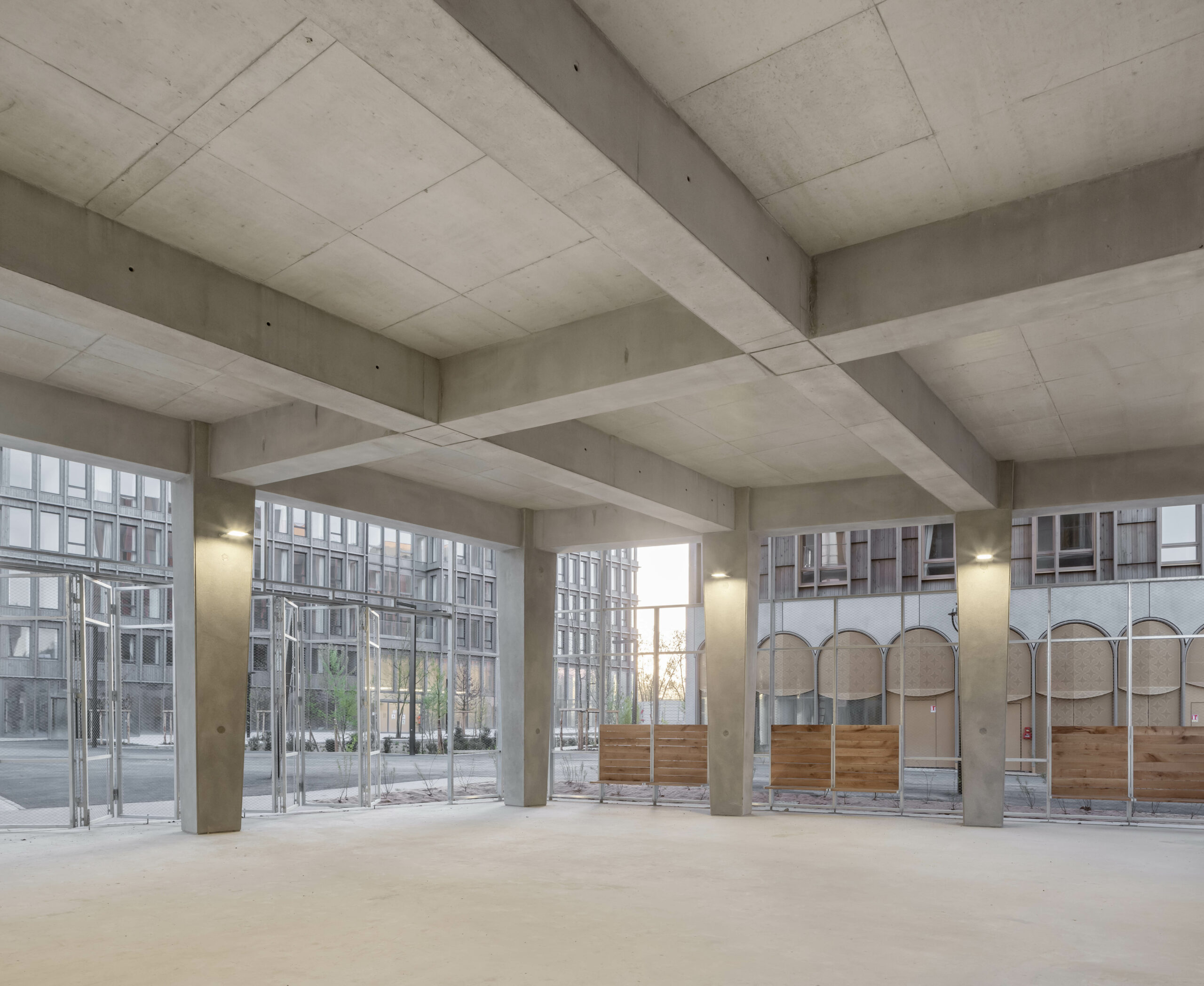
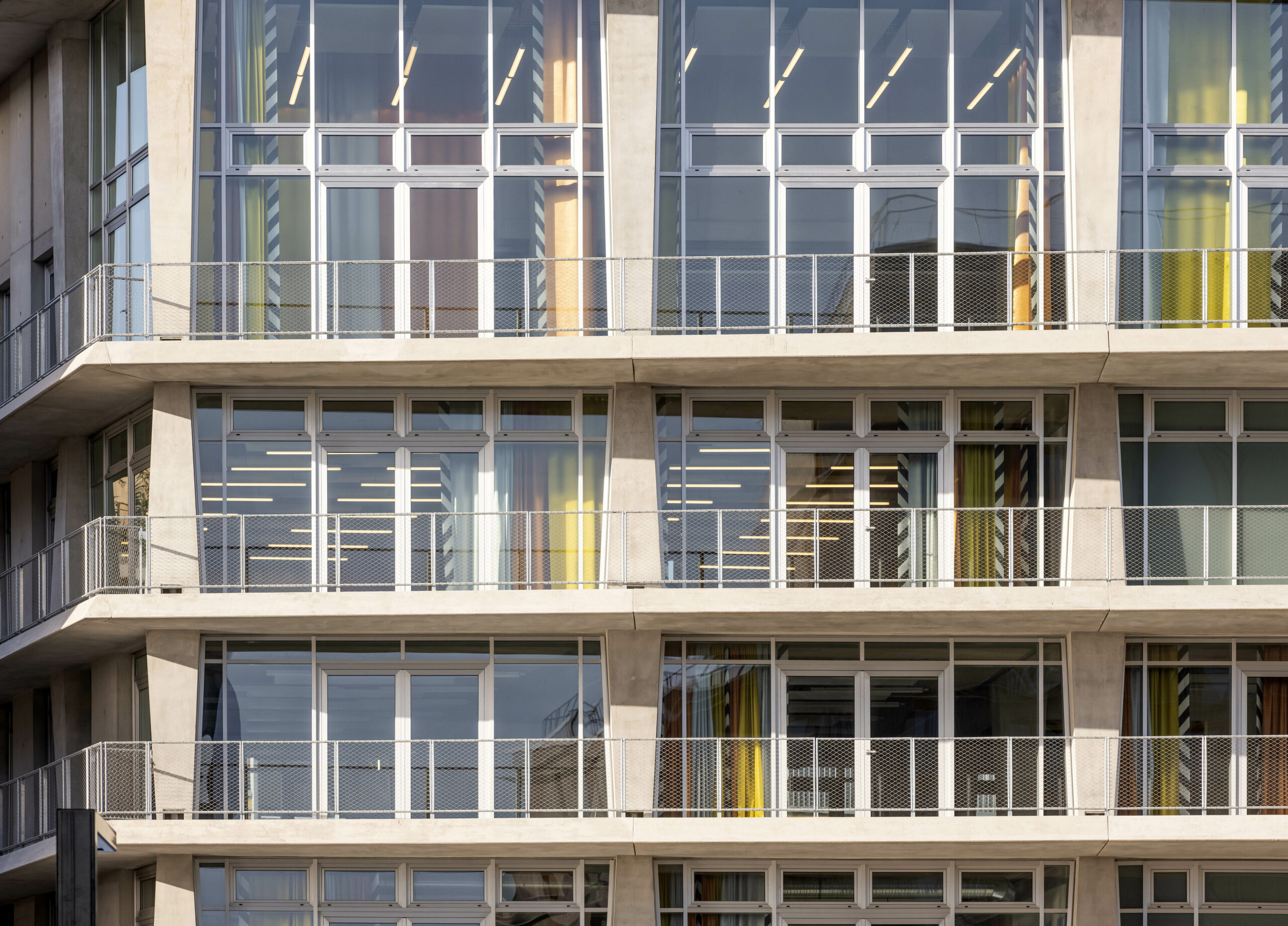

This Arts Centre project is located in the southern part of the river eco-district of L’Île-Saint-Denis (just north of Paris). The central Place des Arts is at the centre of five buildings on the same level with different functions: offices, student accommodations, a hotel, a water sports centre and our Urban Arts Centre. Planned long before Paris 2024 decided to install part of its Olympic athletes’ village here for a period of one month, this site, originally intended for a joint development zone and initiated by Plaine Commune (local housing project), has undergone a new evolution in this context. Thus, the private sector was invited to take over the cultural facility initially planned, without any precise programming, and we had to articulate an architectural response to it, by creating free floors, suitable for maximum modularity and versatility. The purpose of the building is therefore twofold and in two sequences: first to accommodate the athletes during the time of the events (Olympics and Paralympics), then to open, after some minor transformations, a sustainable City of Urban Arts, which will act as a focal point for the district, by mixing all kinds of public… Thus, following a “marathon competition” that we won, this project – a five-storey concrete building with a height of 24 metres – is based symbolically on the qualities of athletes and their athletic abilities of flexibility, power and resistance…
Compression/Tension/Extension
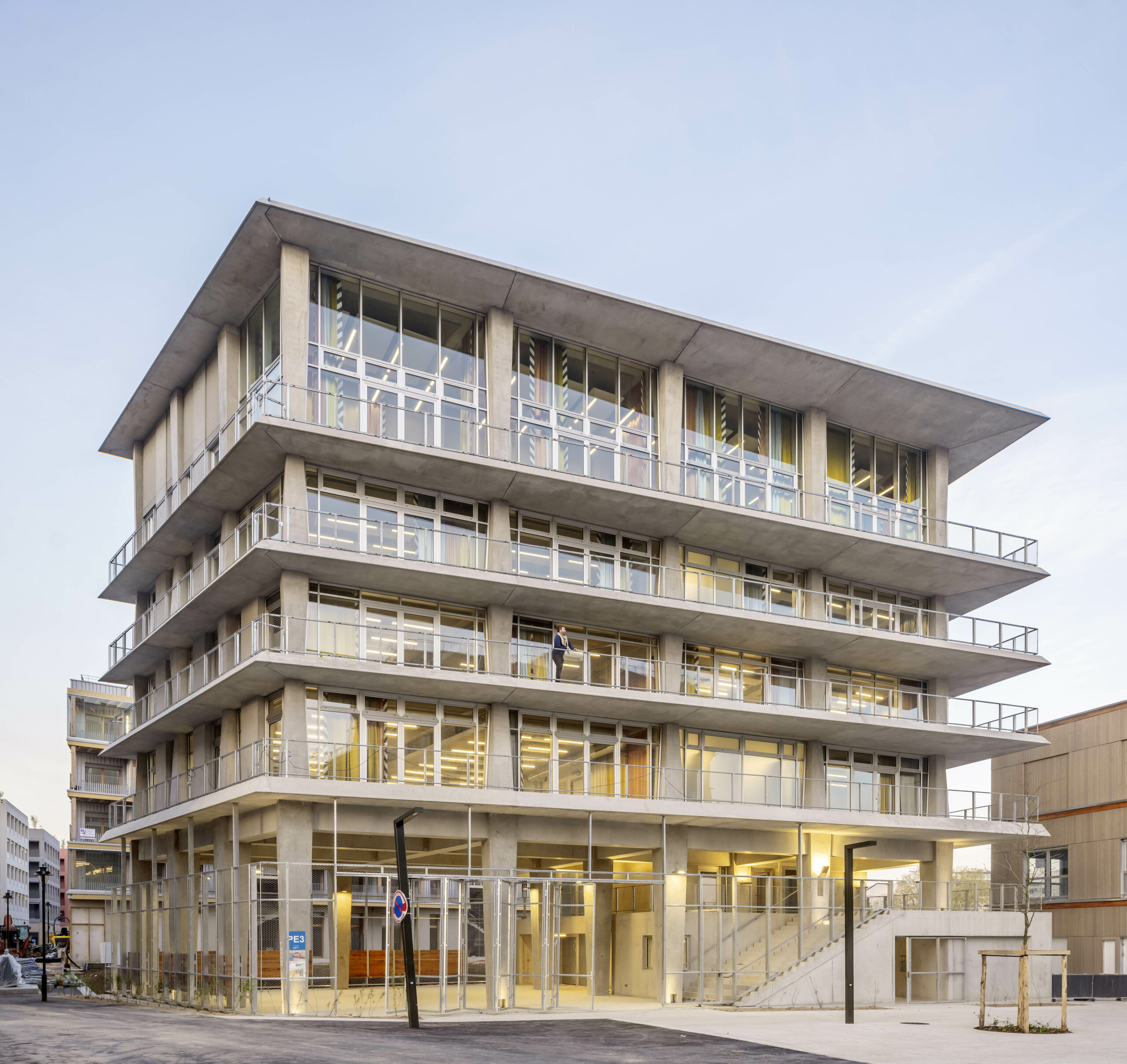
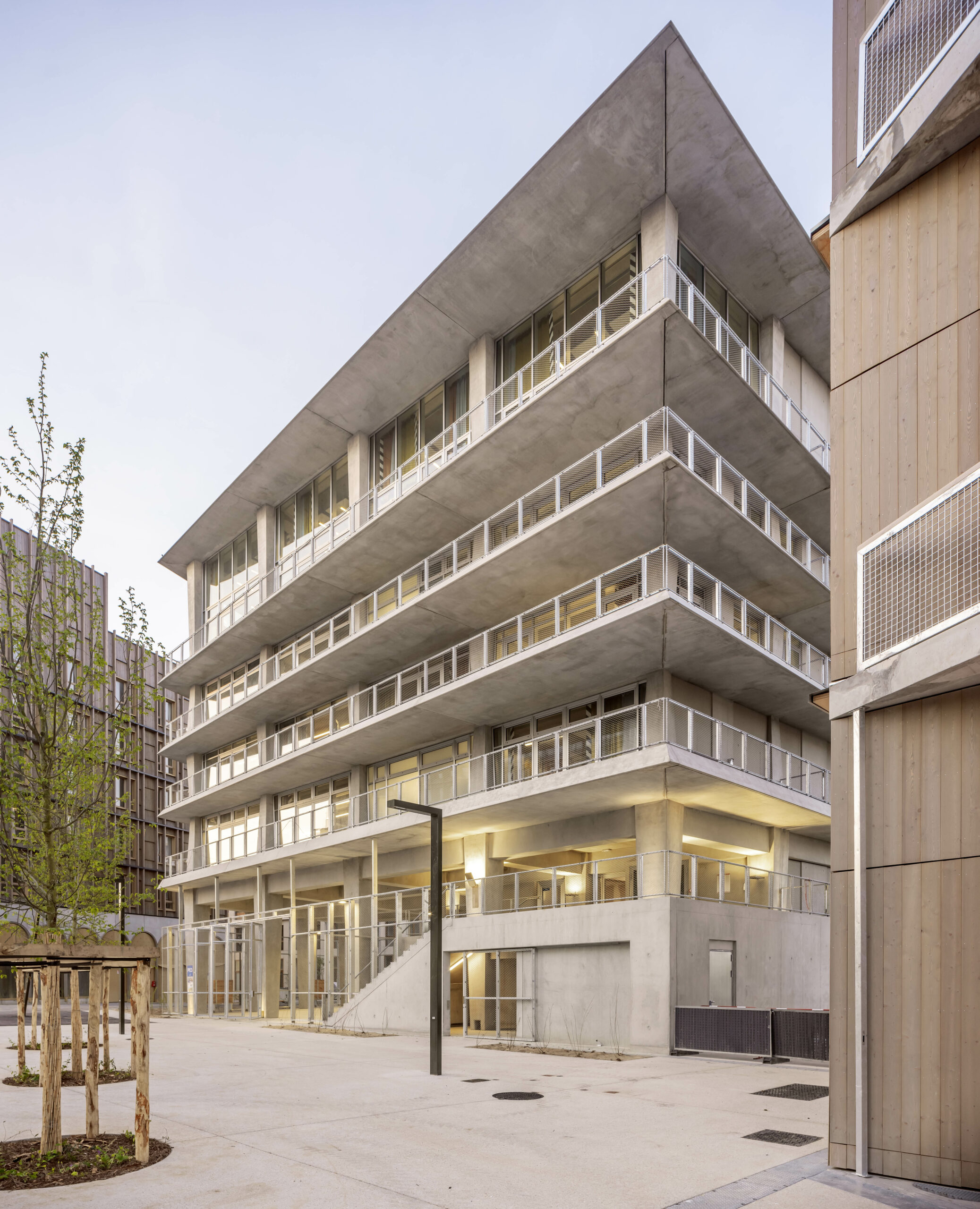
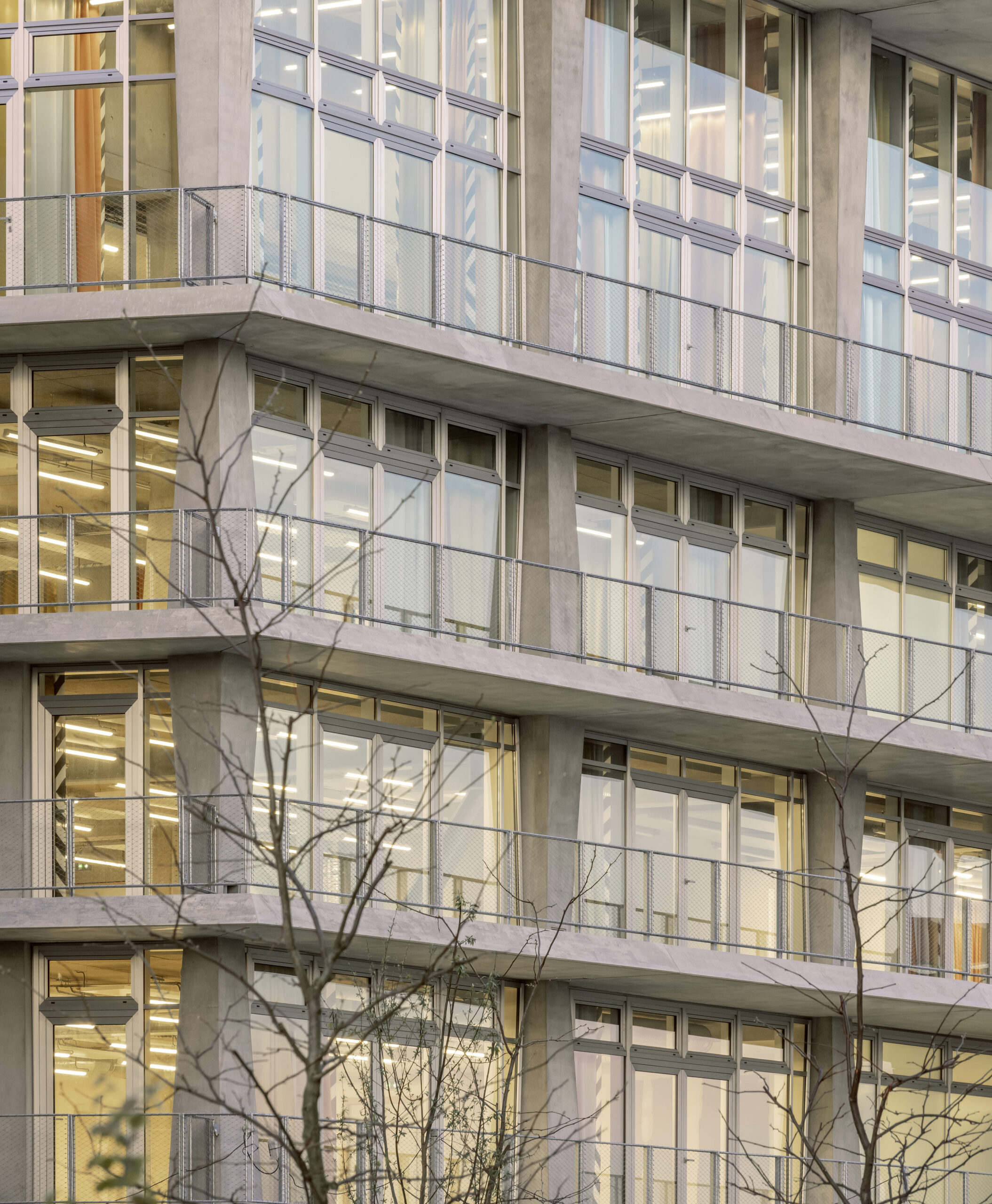
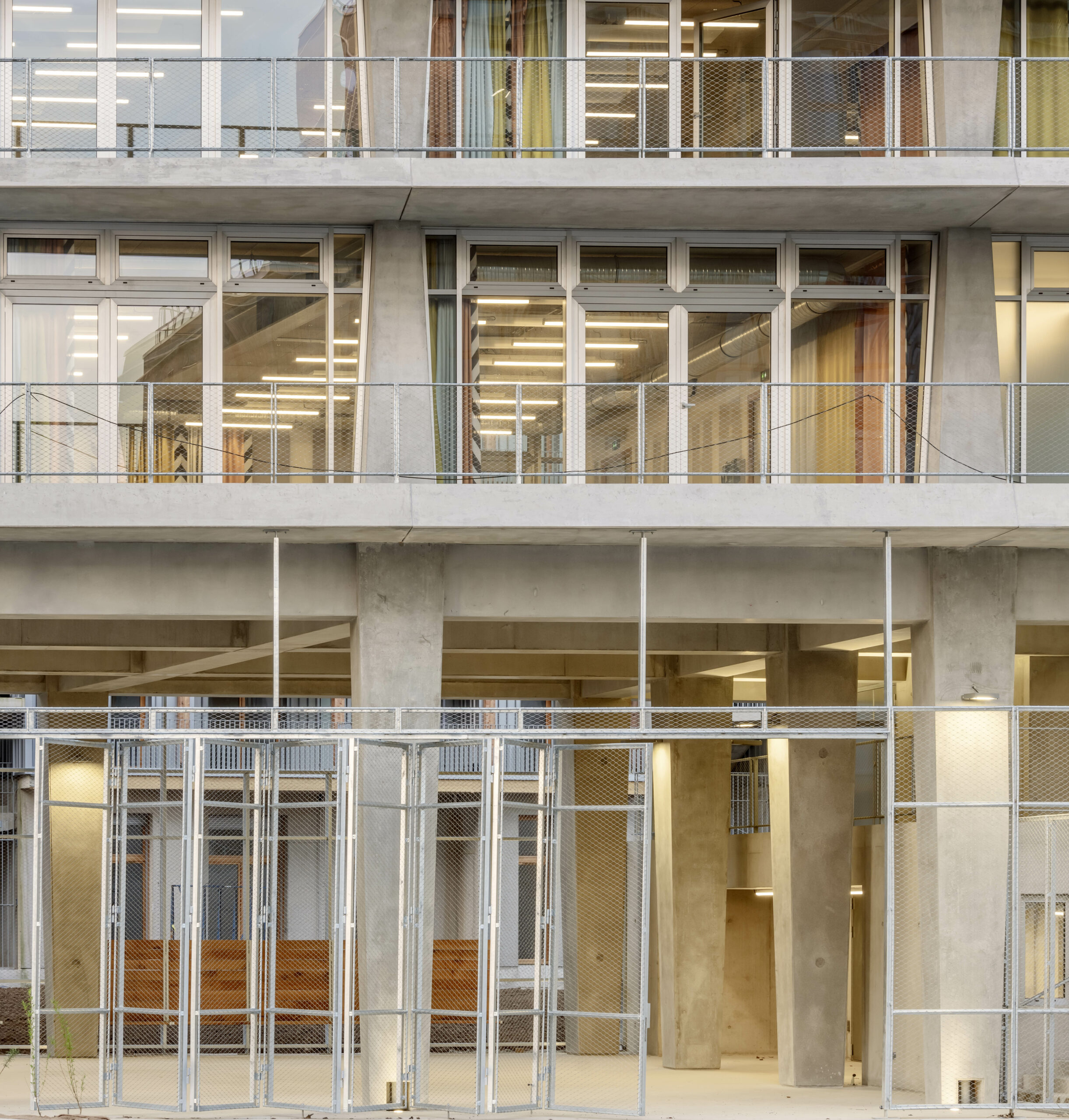
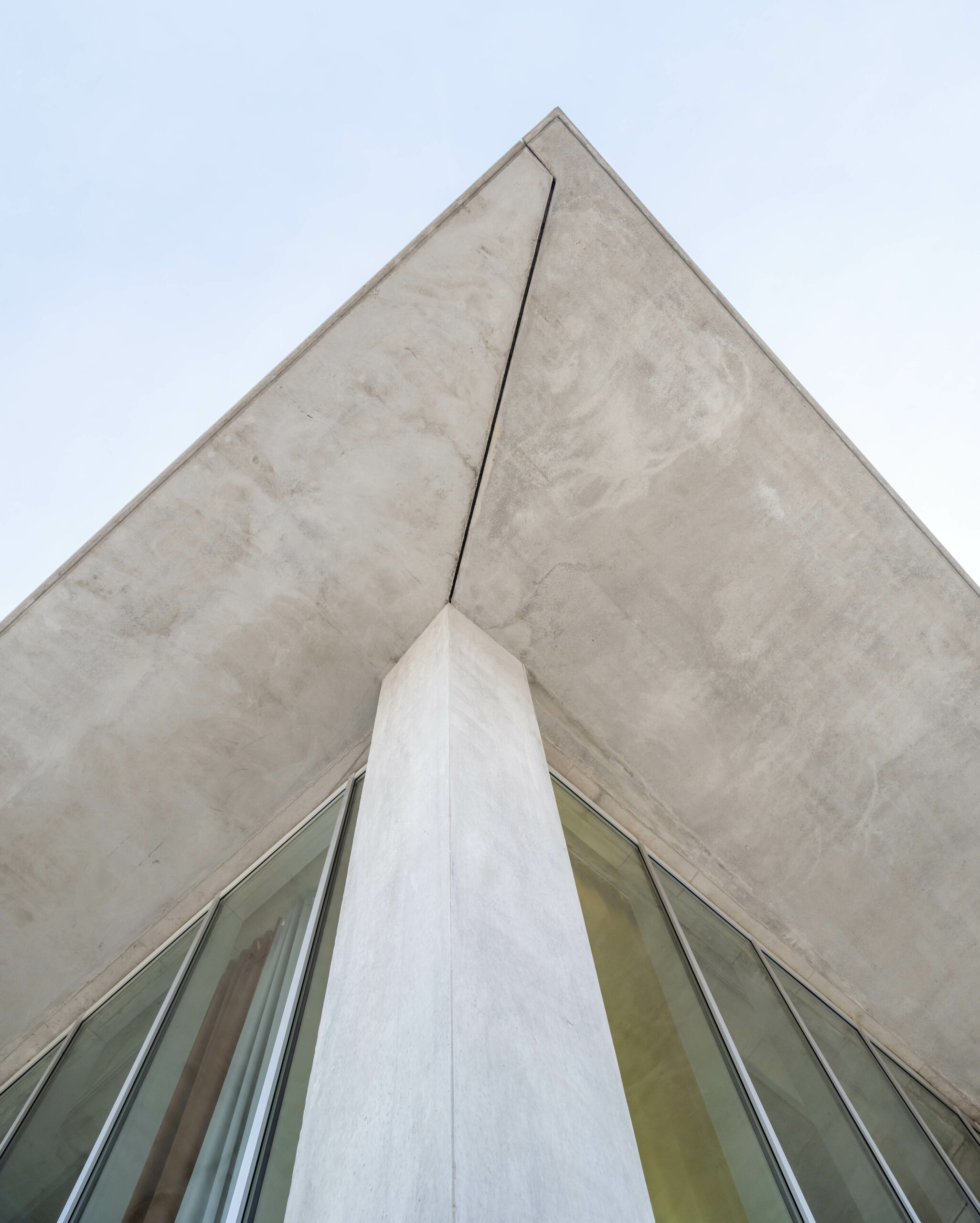
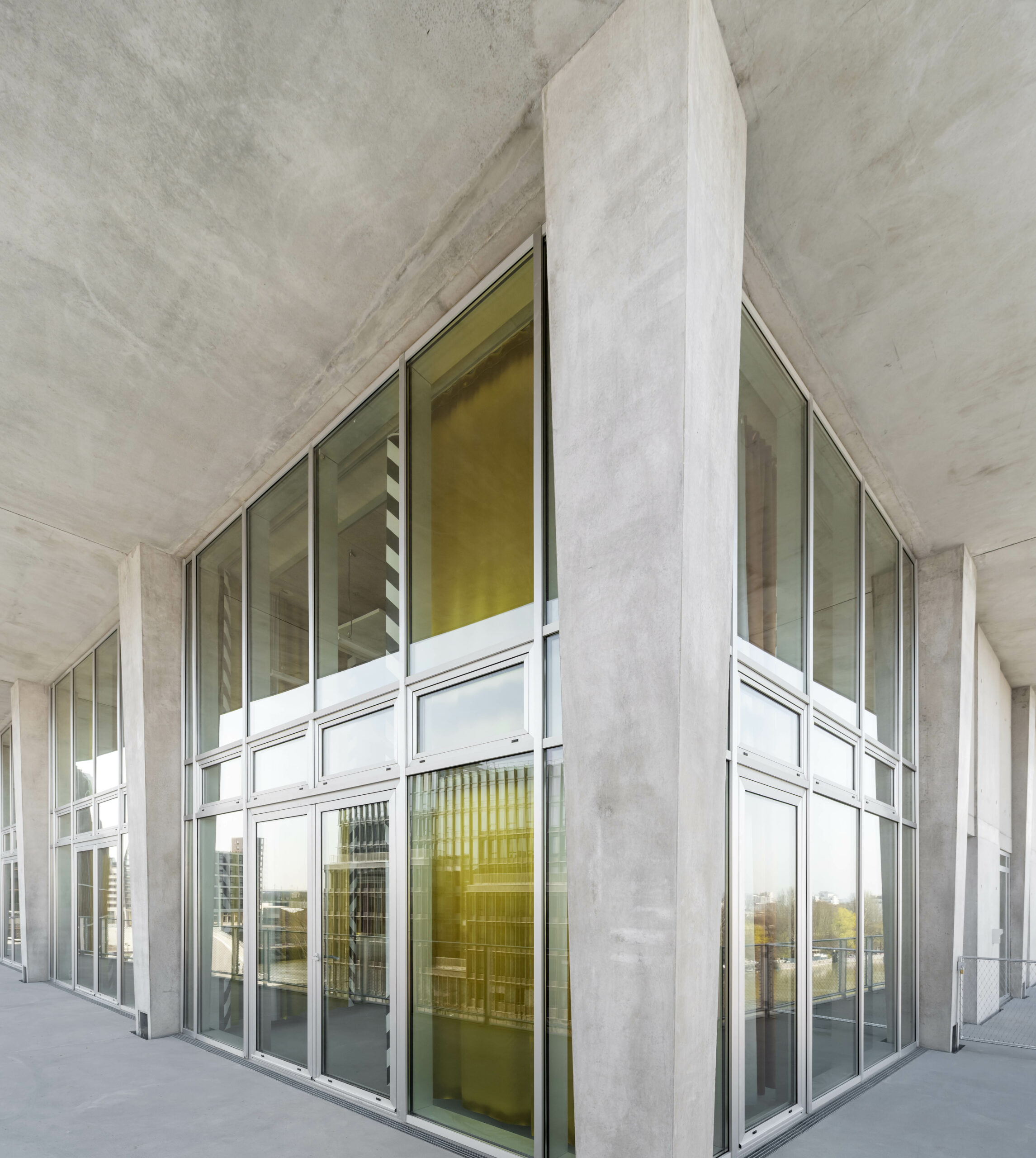
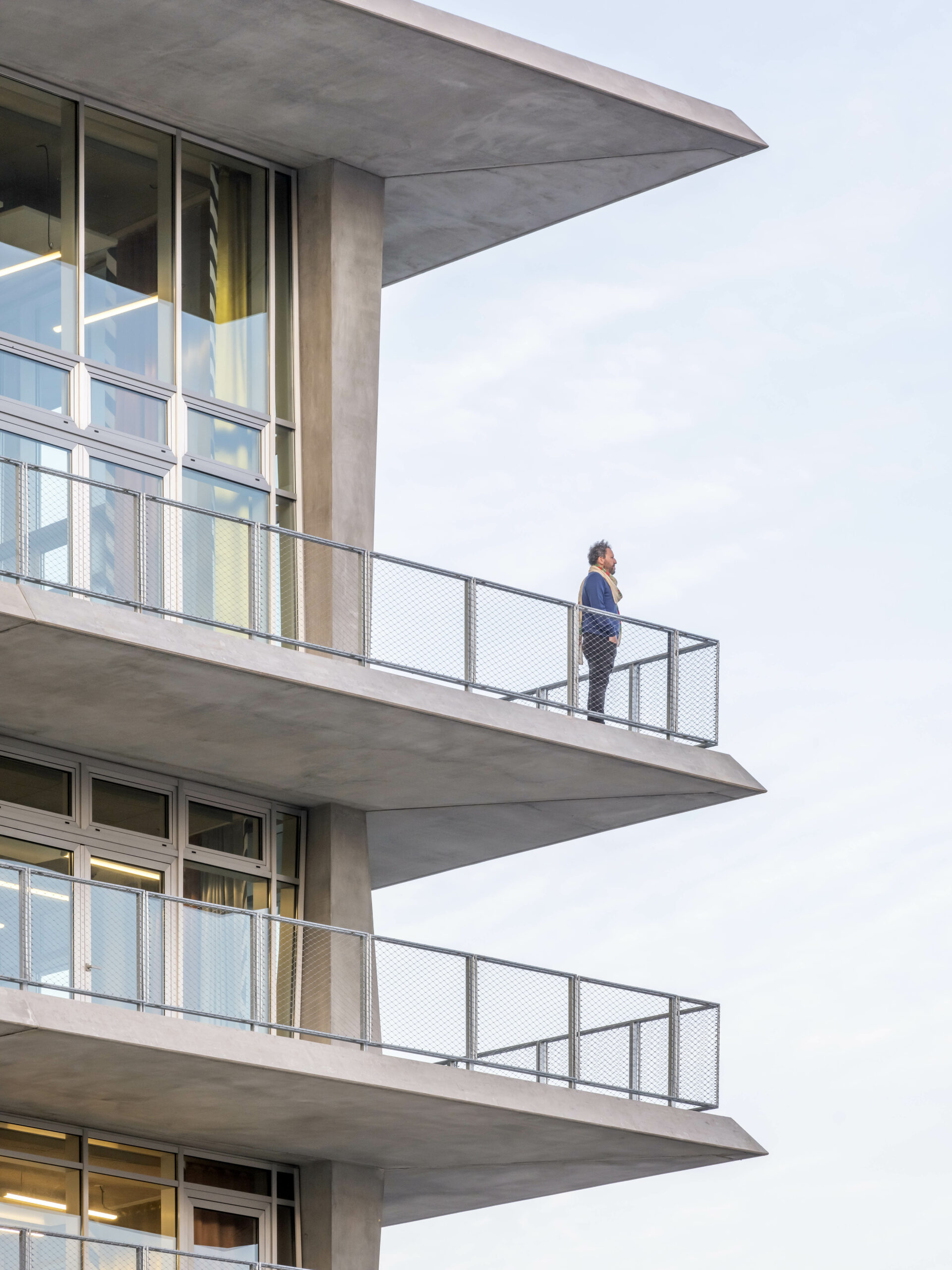
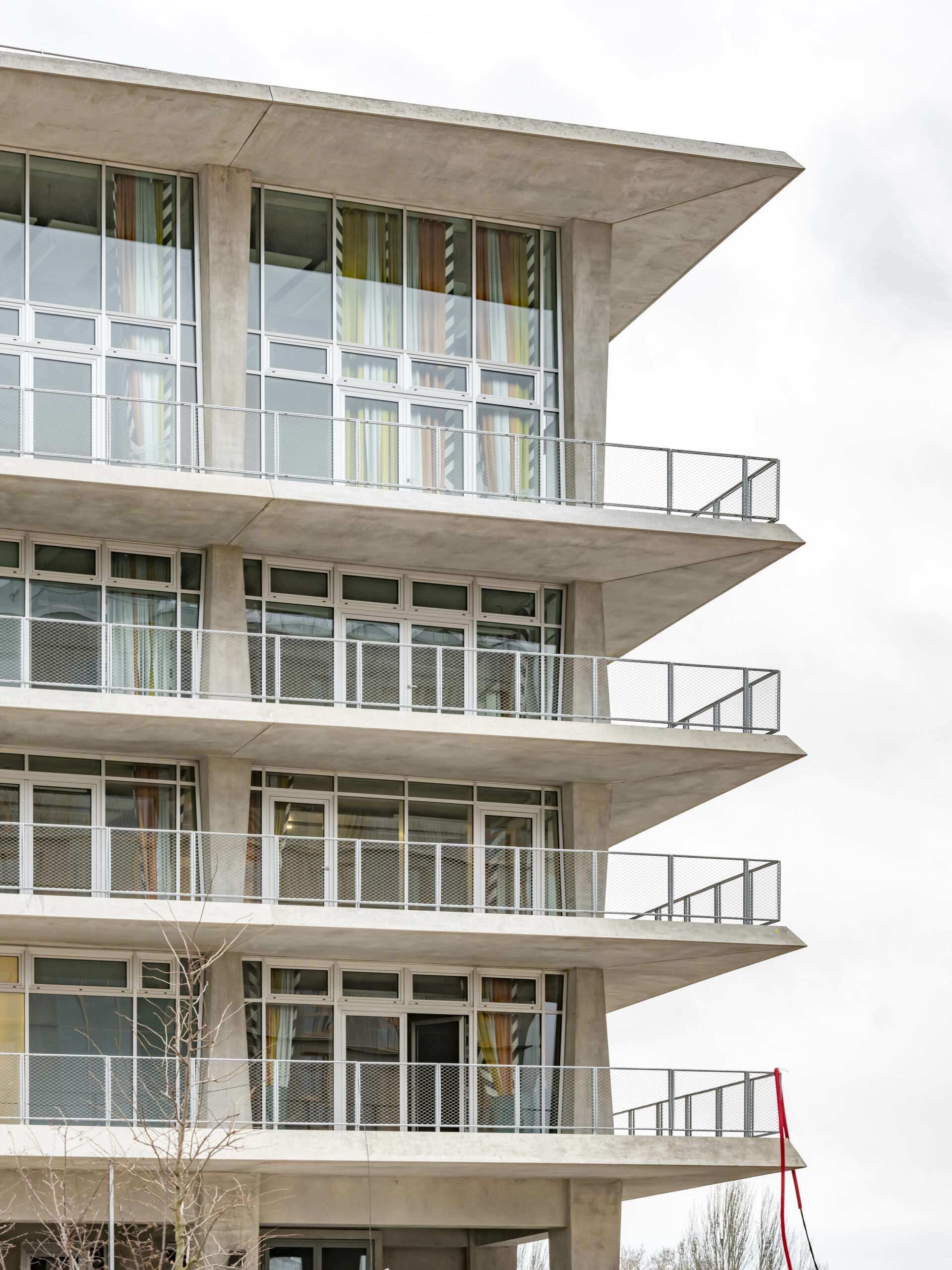
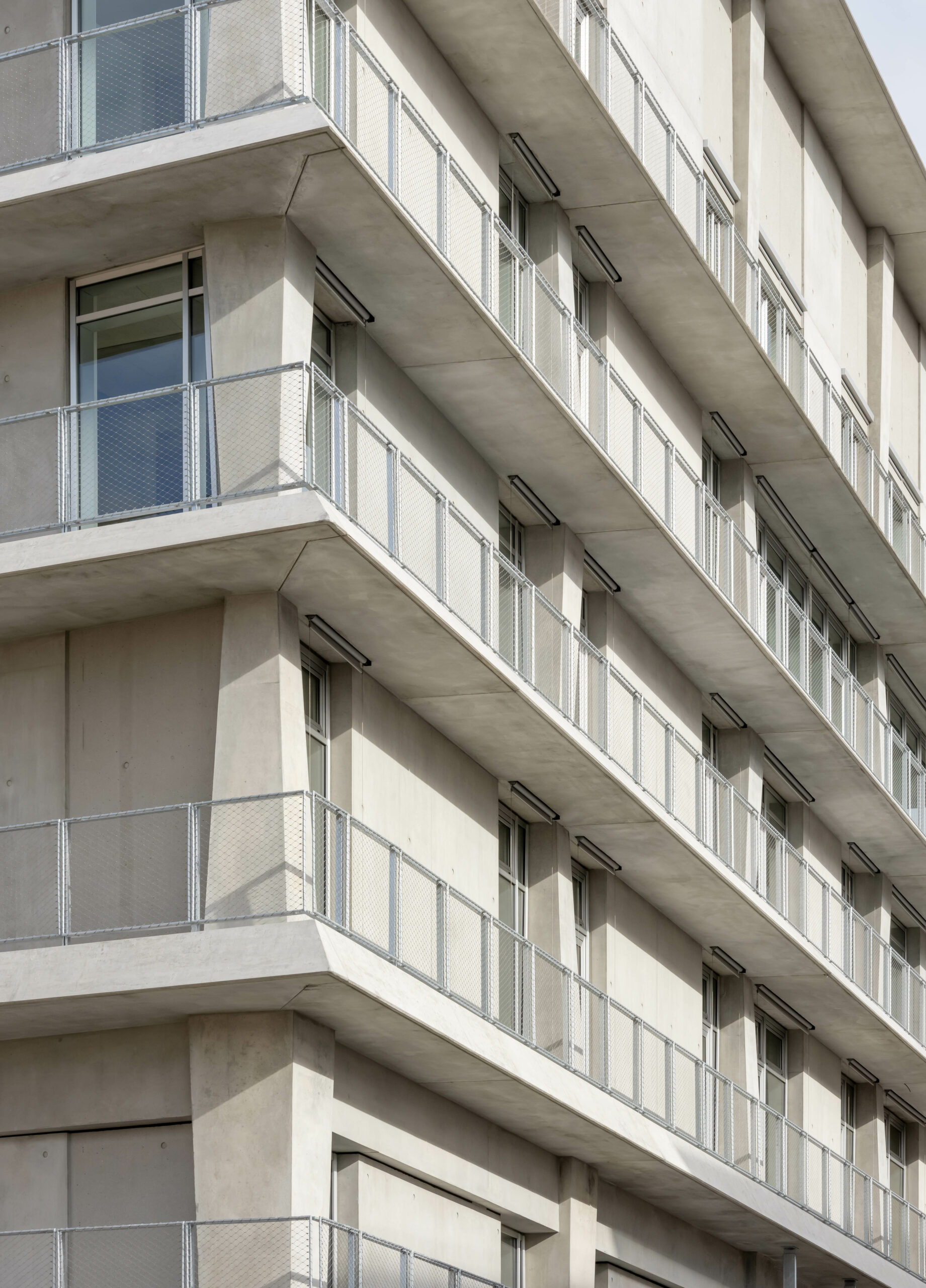
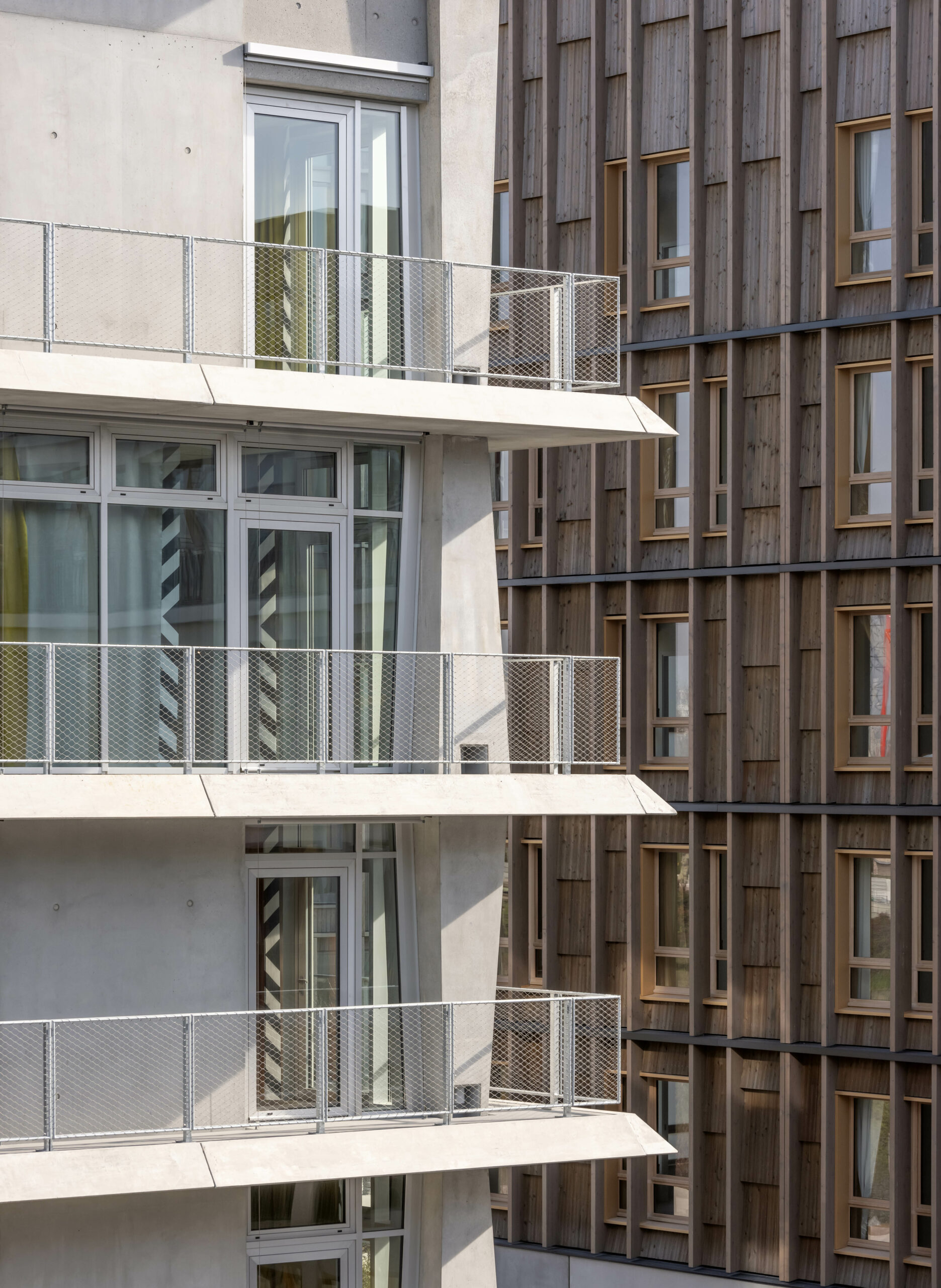
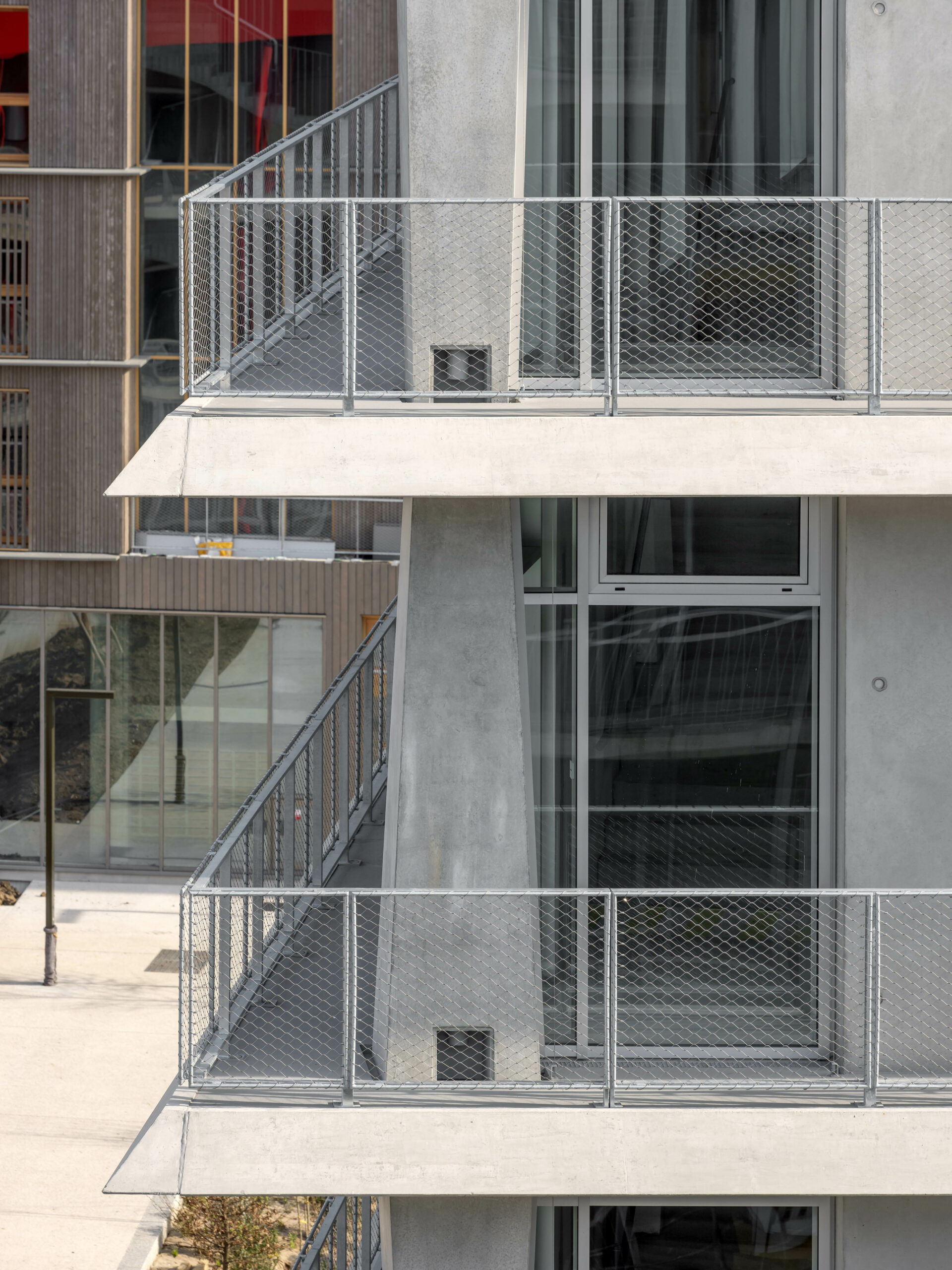
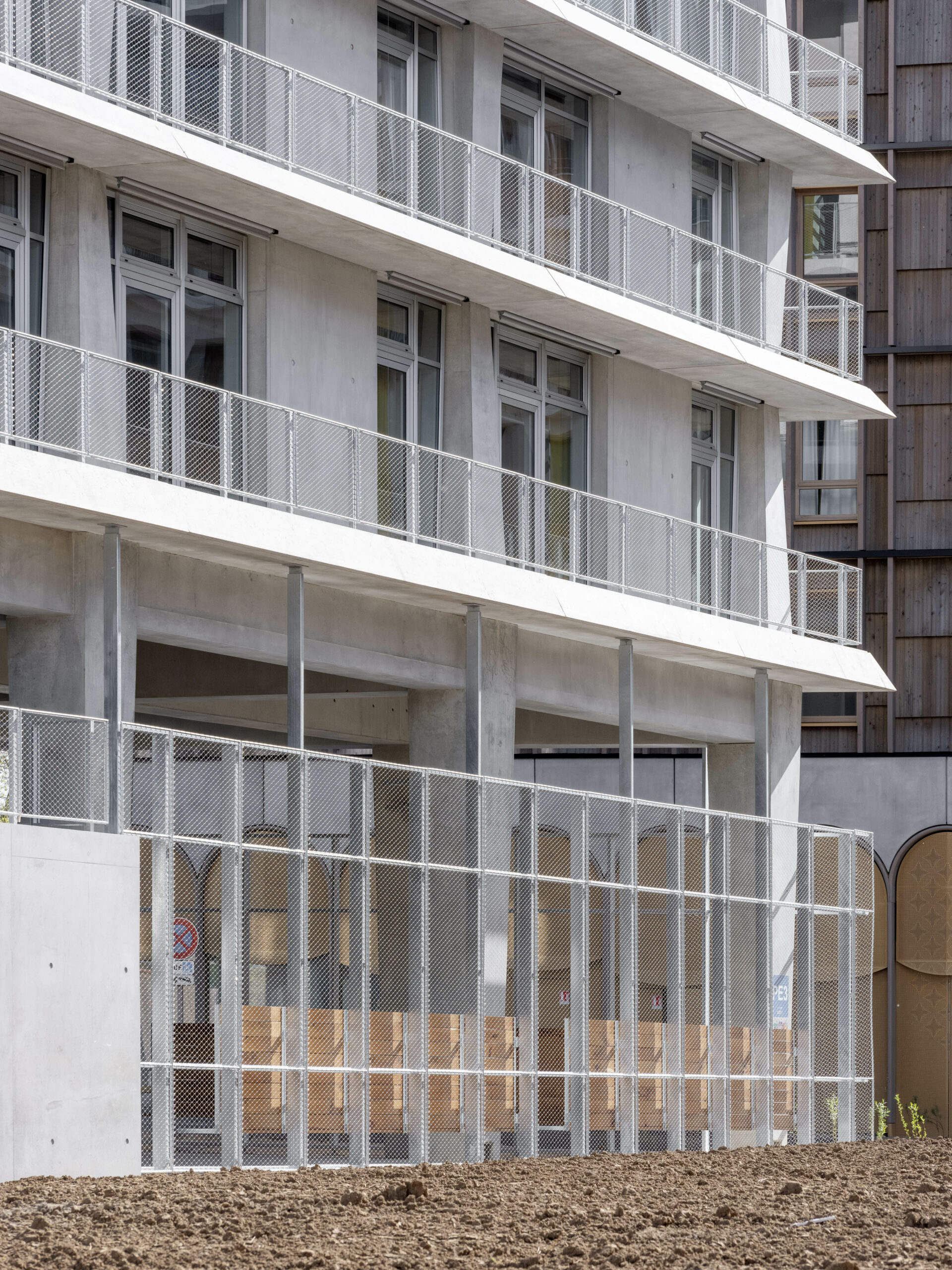
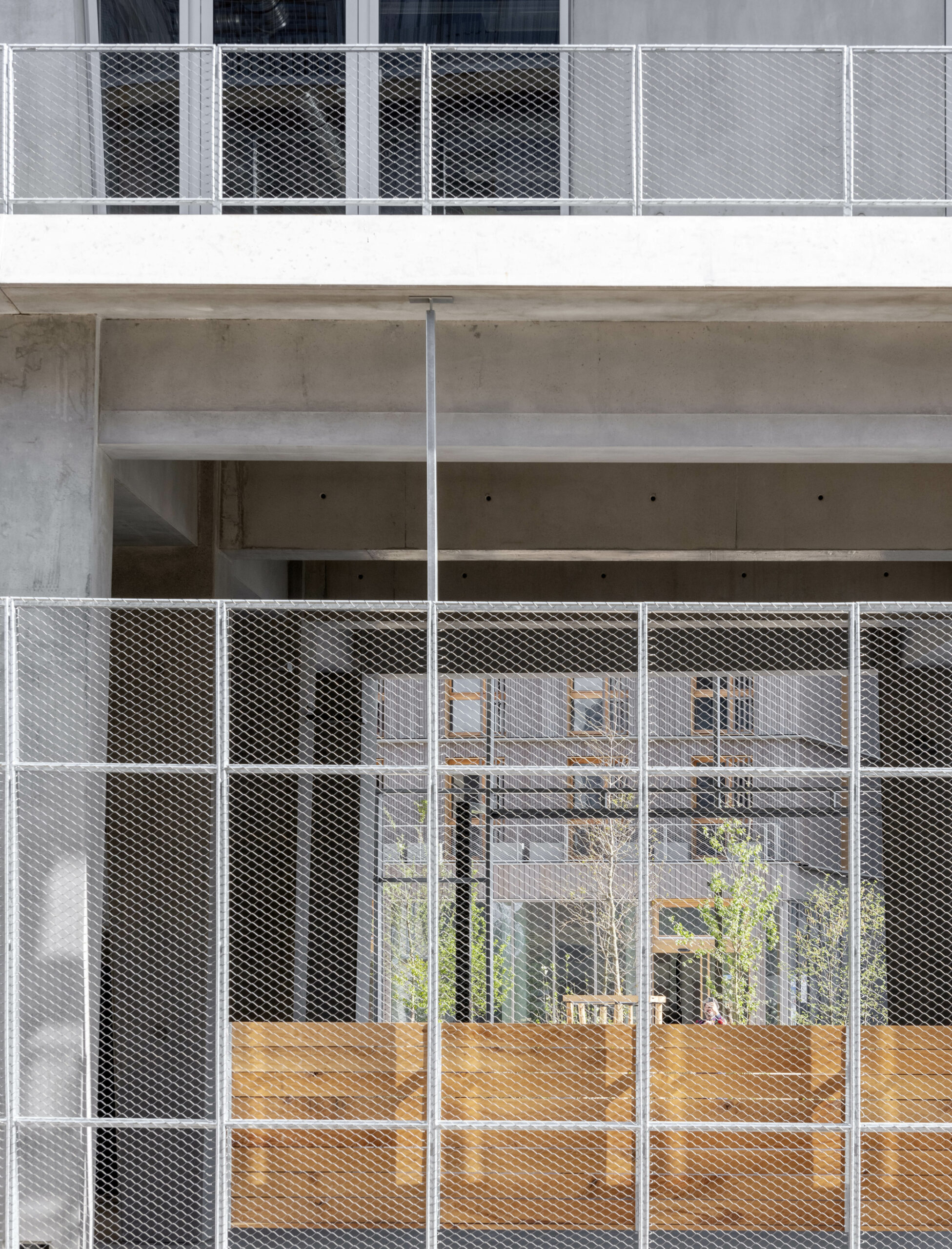
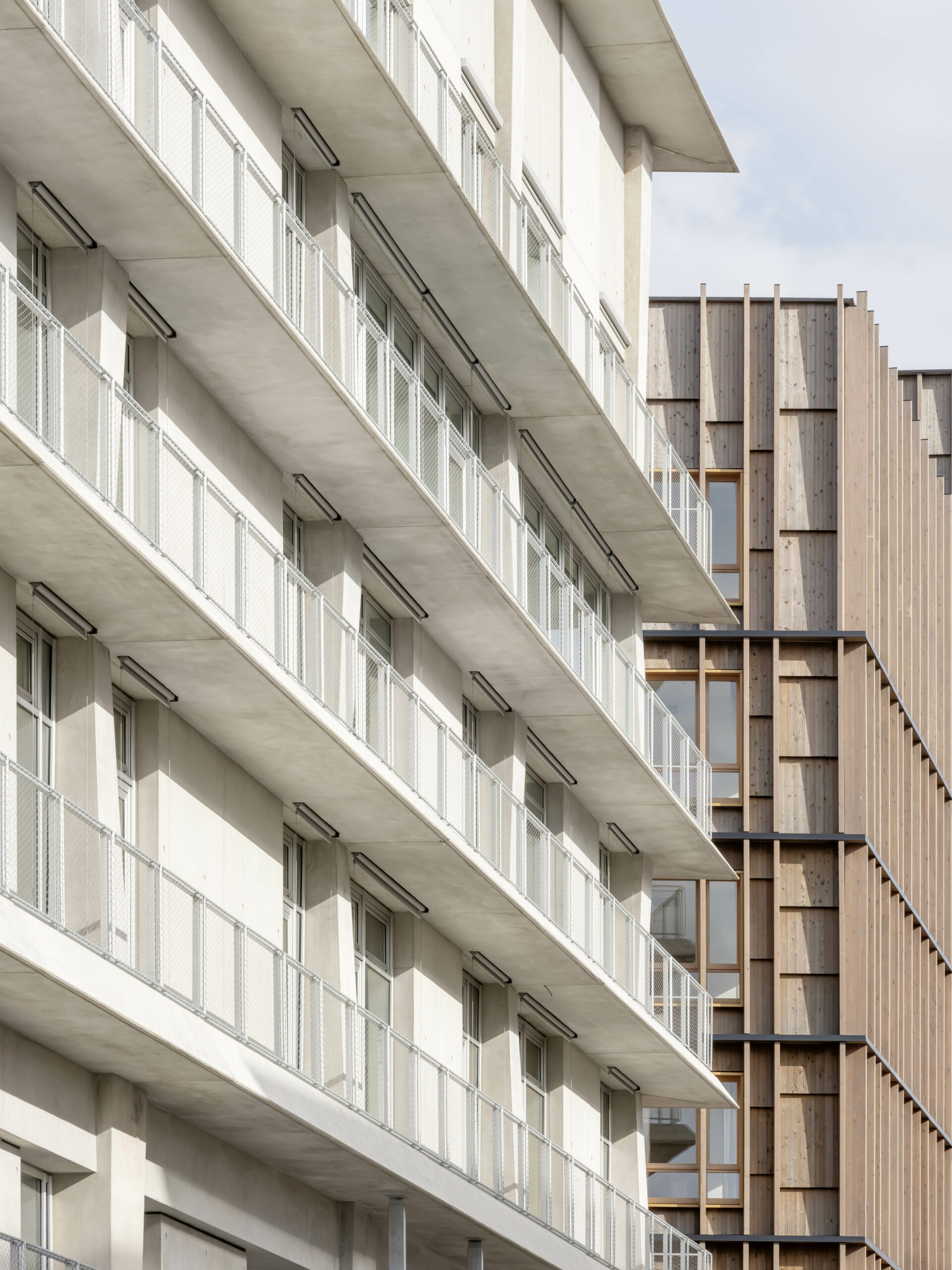
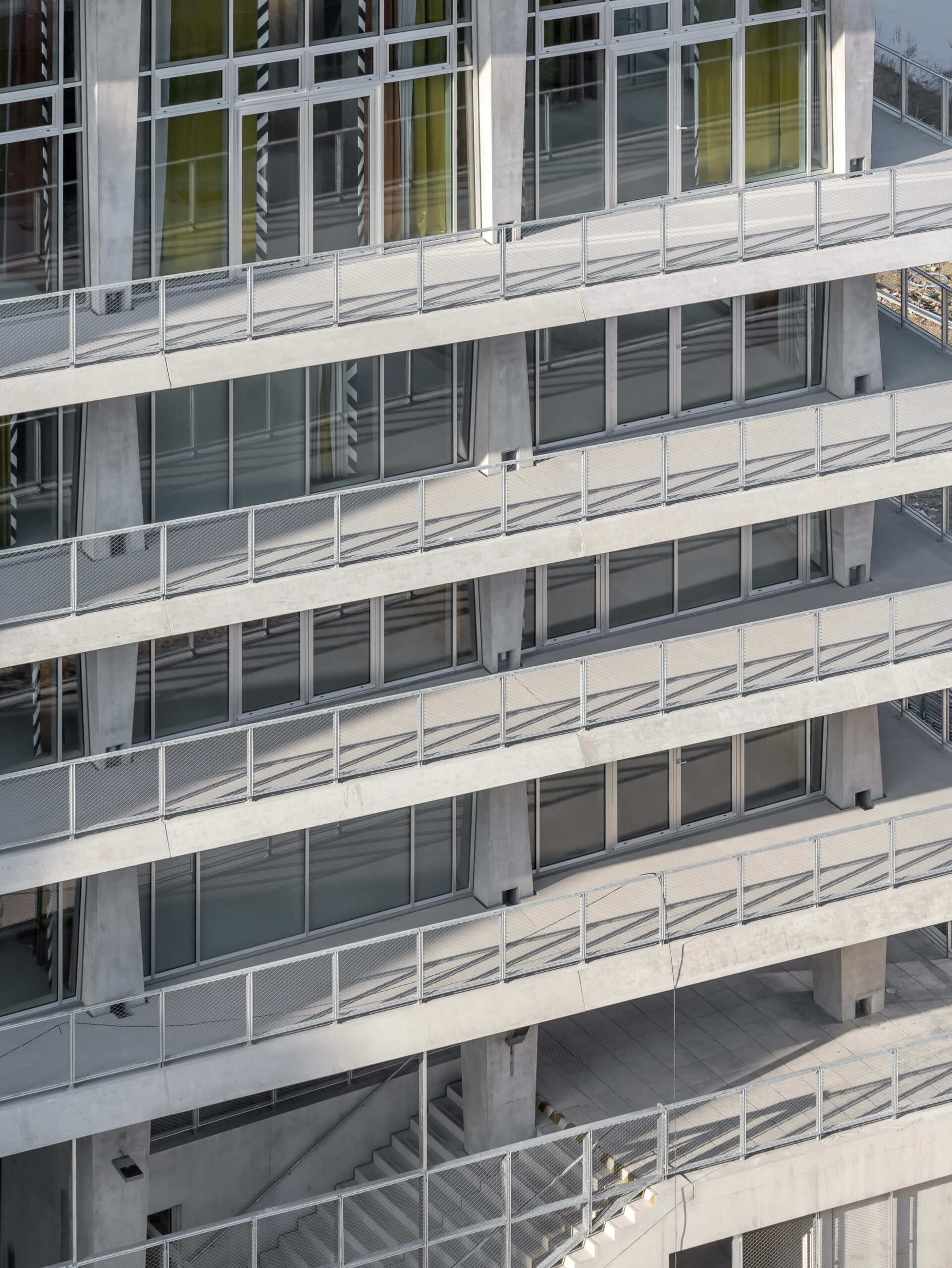
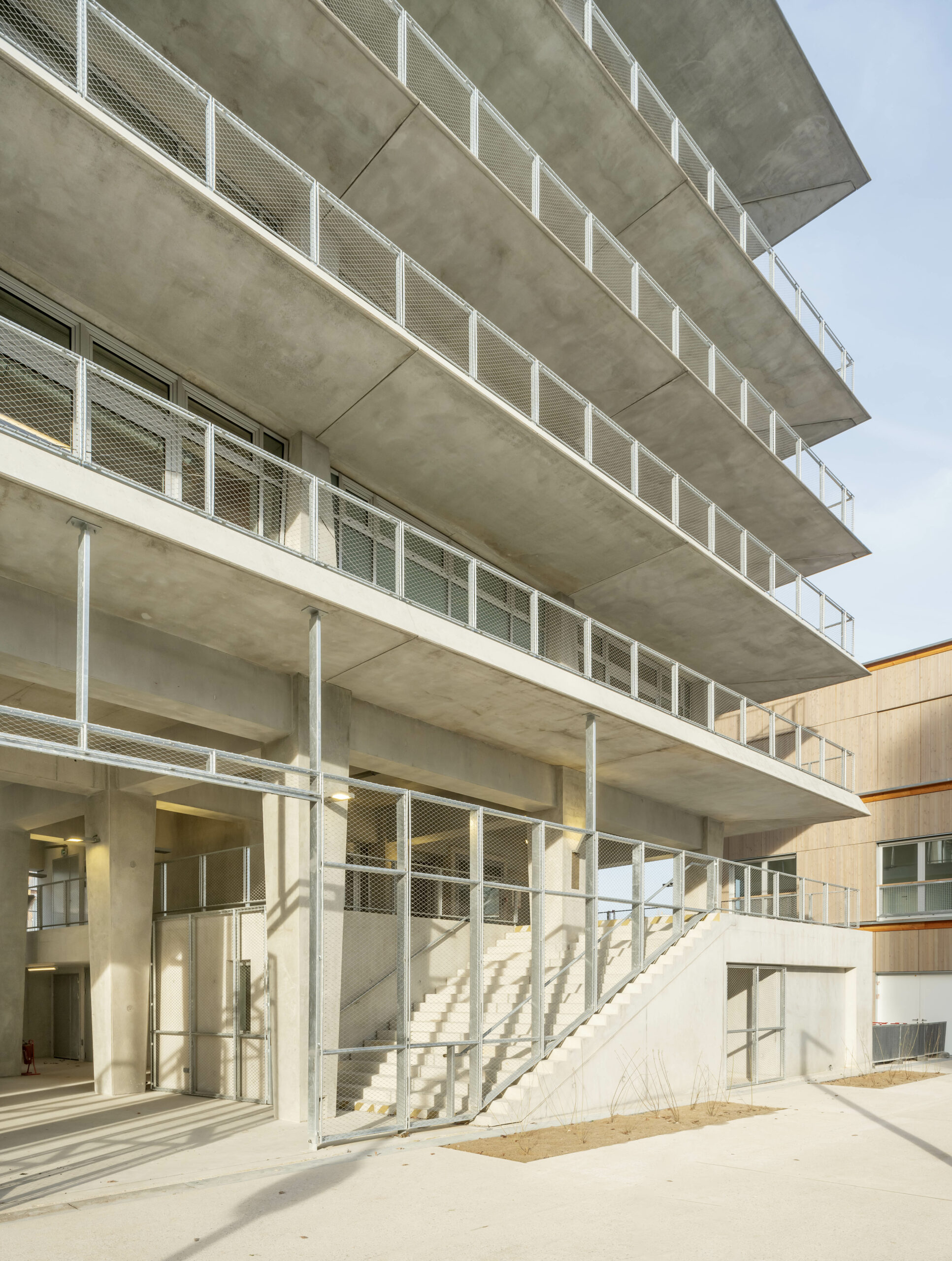
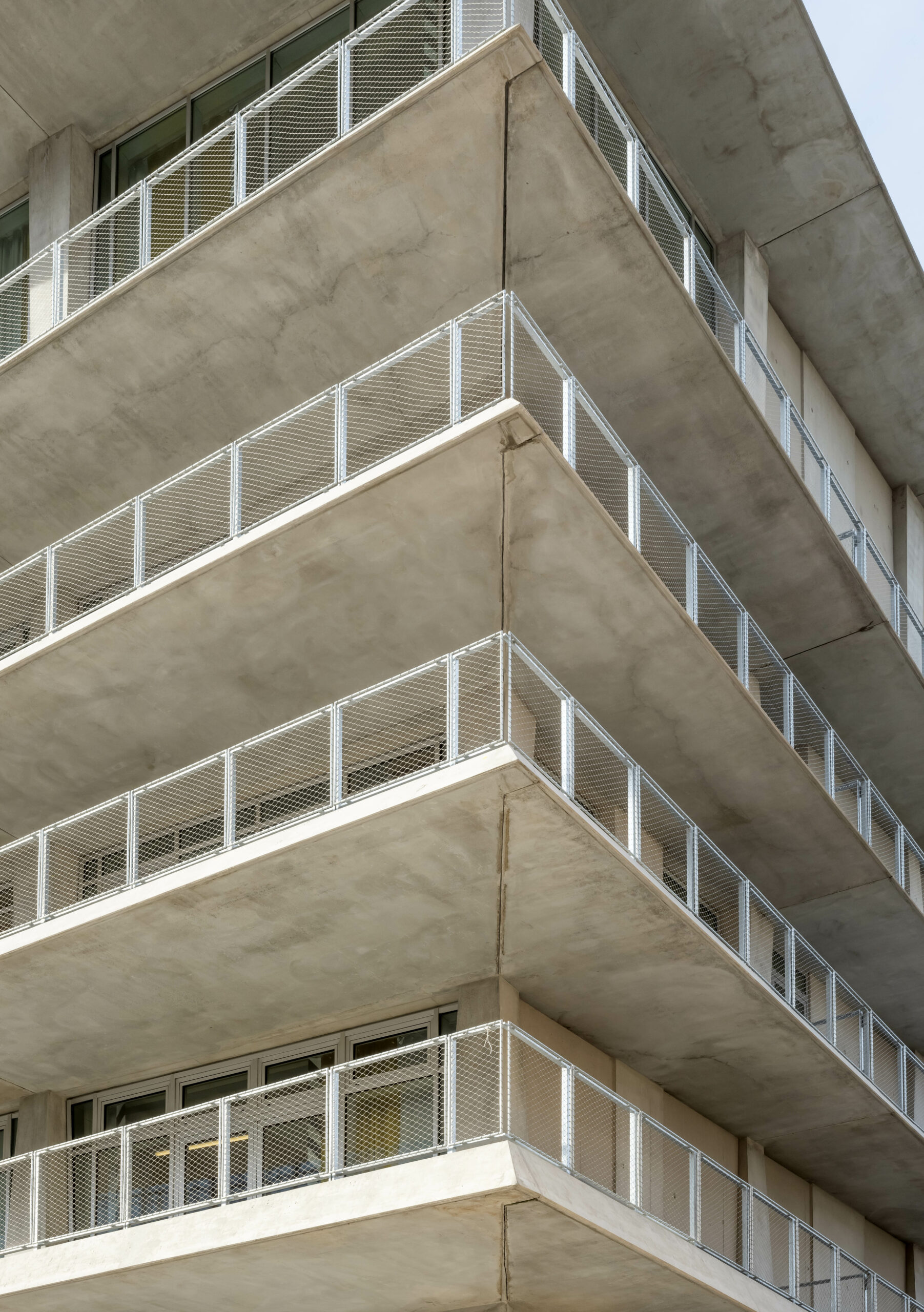
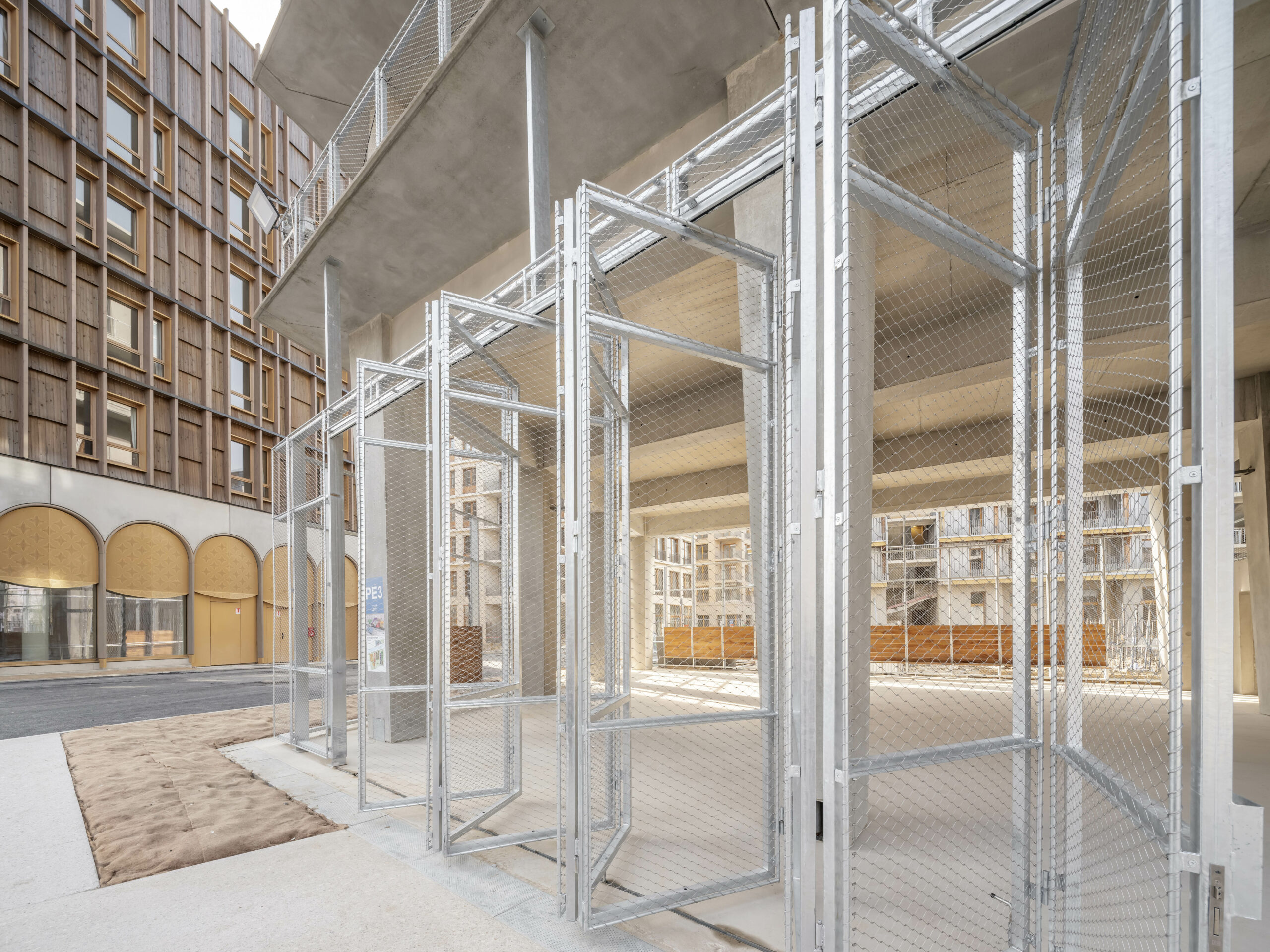
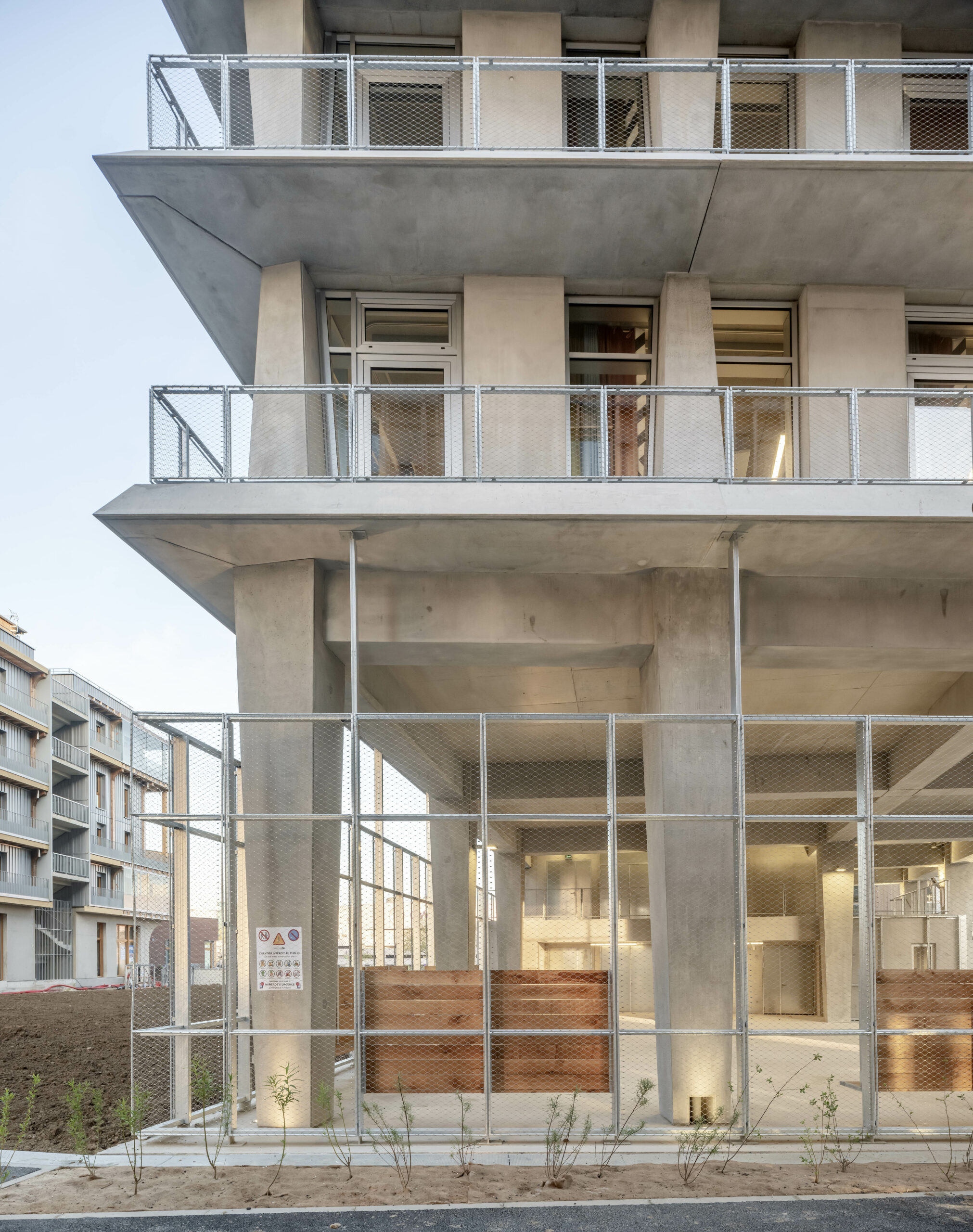
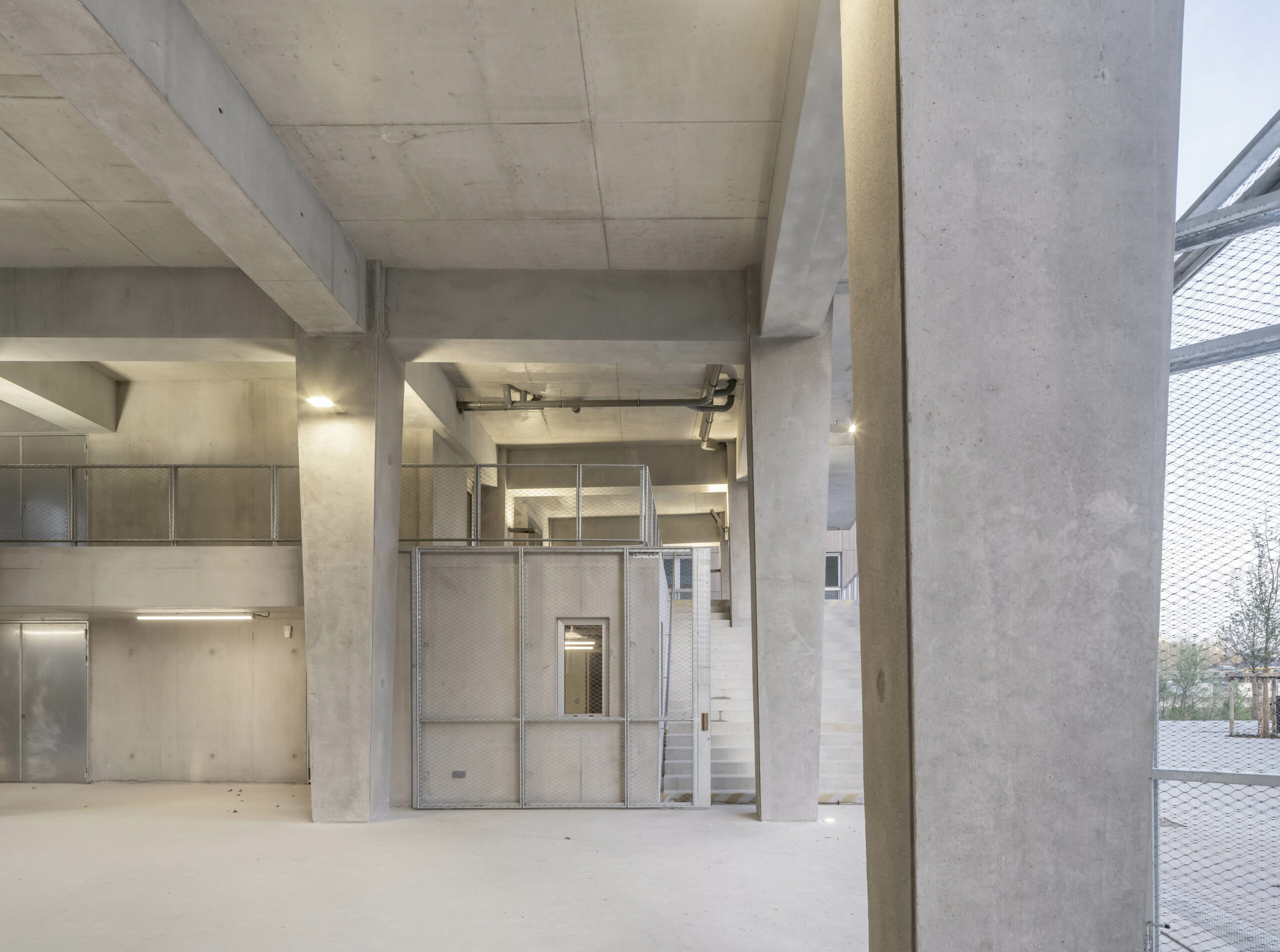
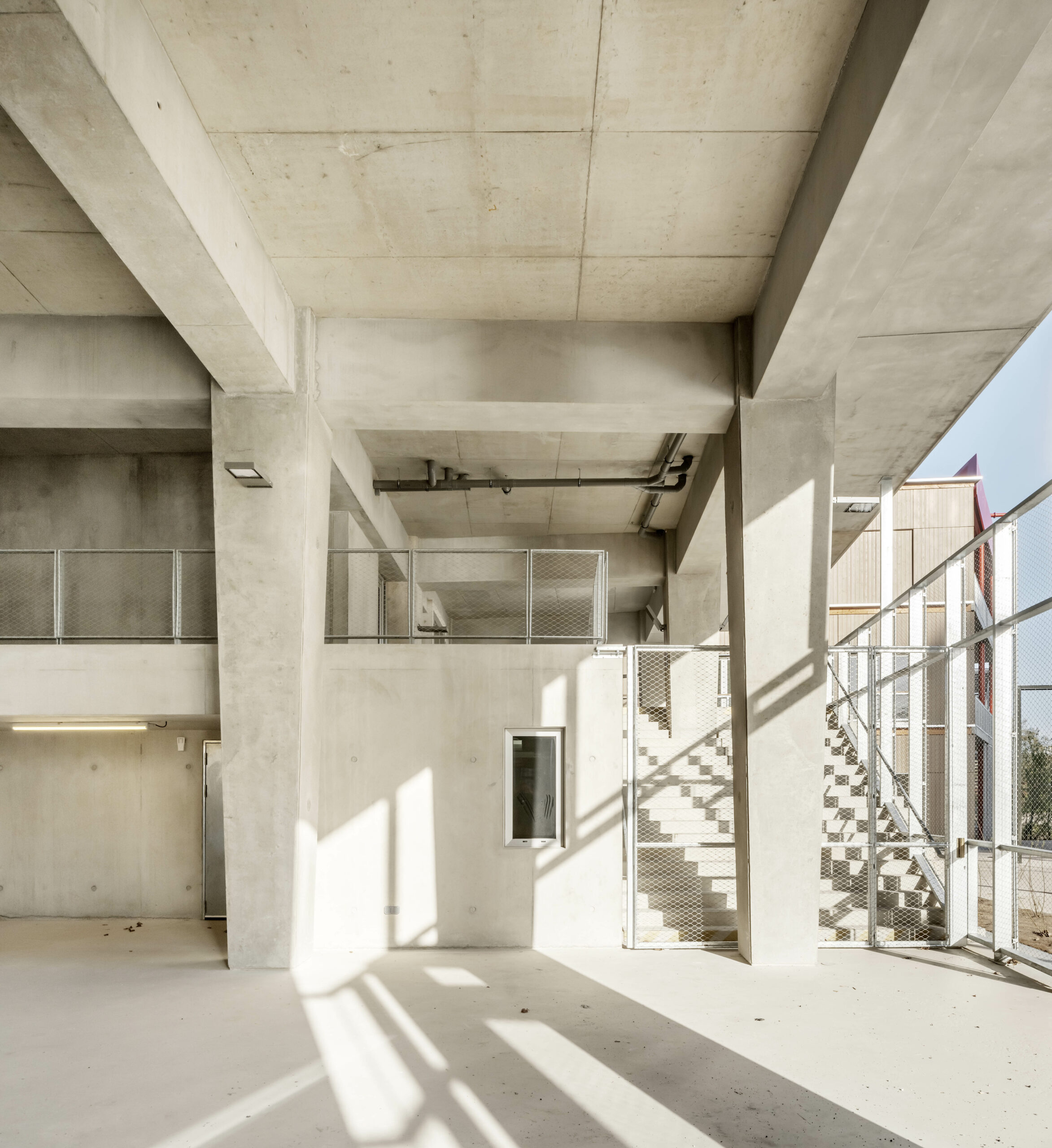
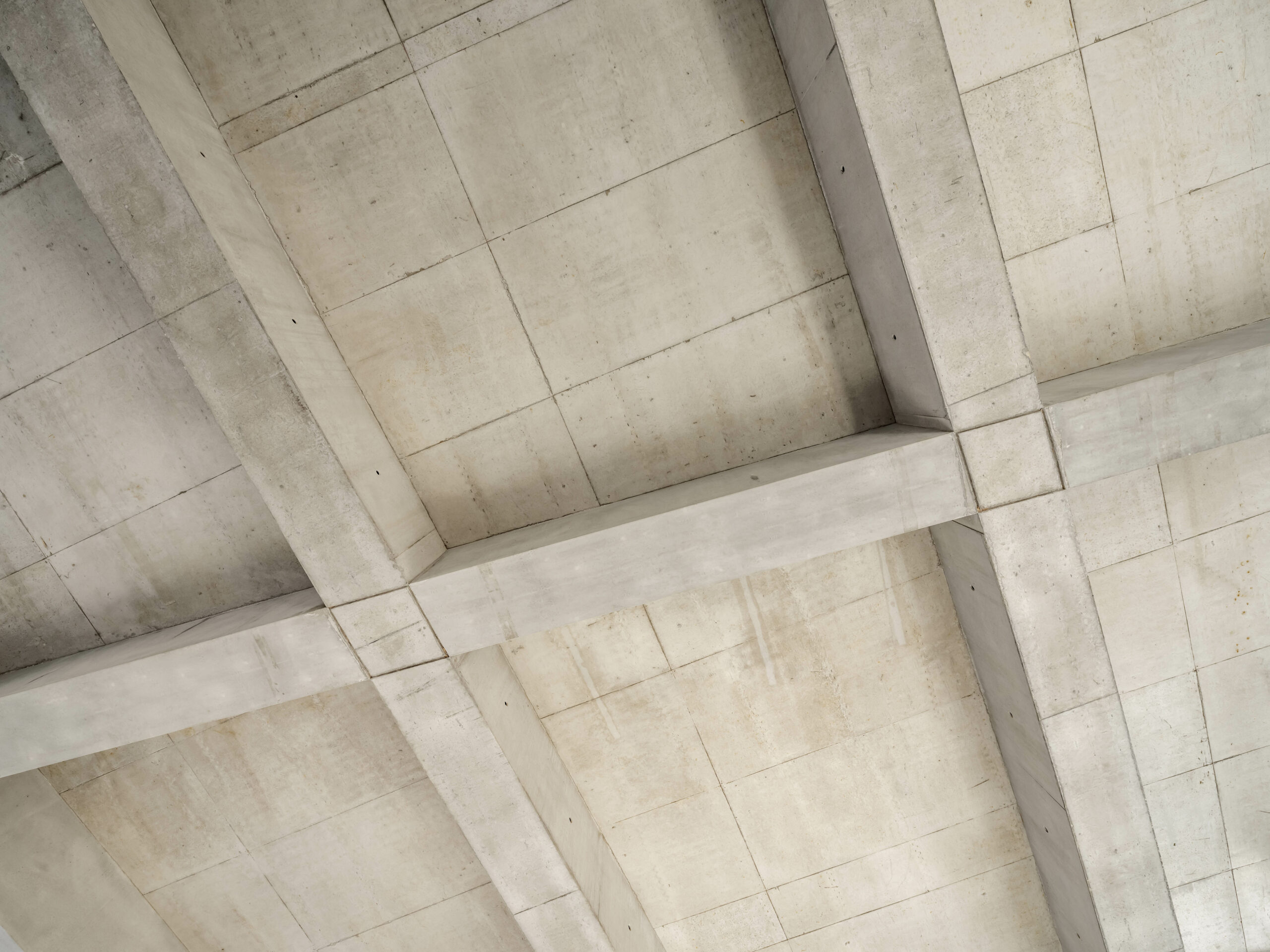
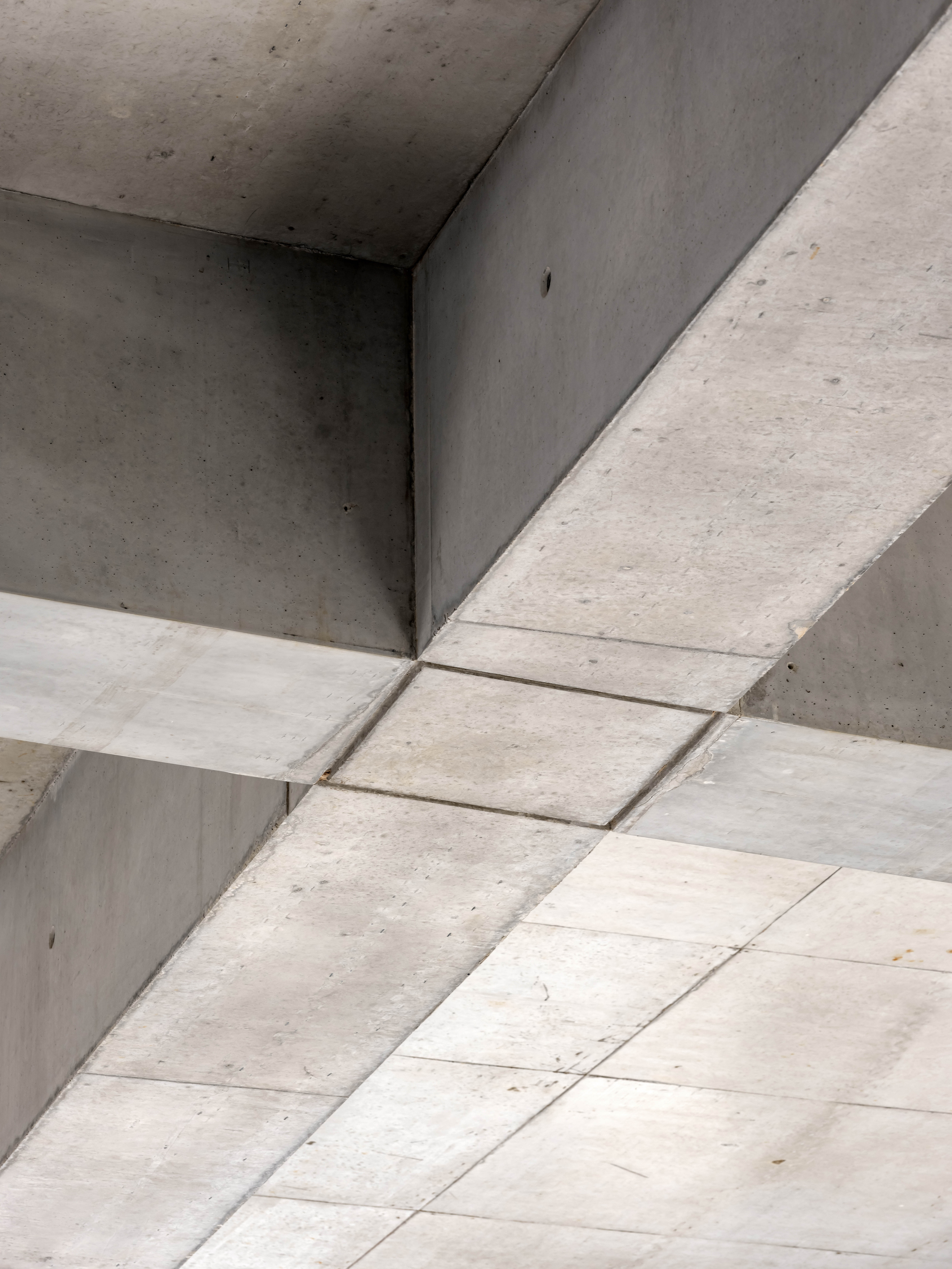
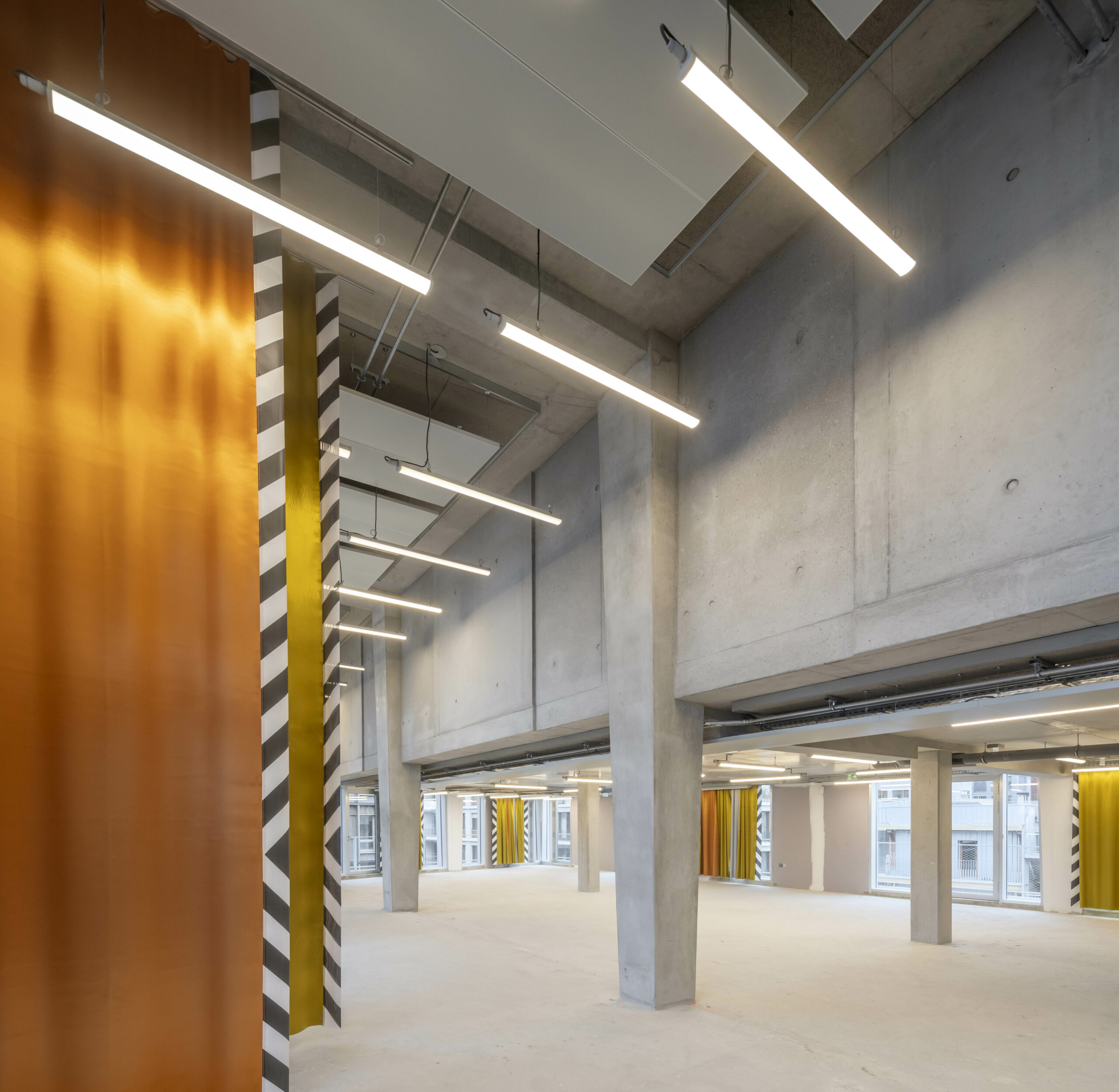
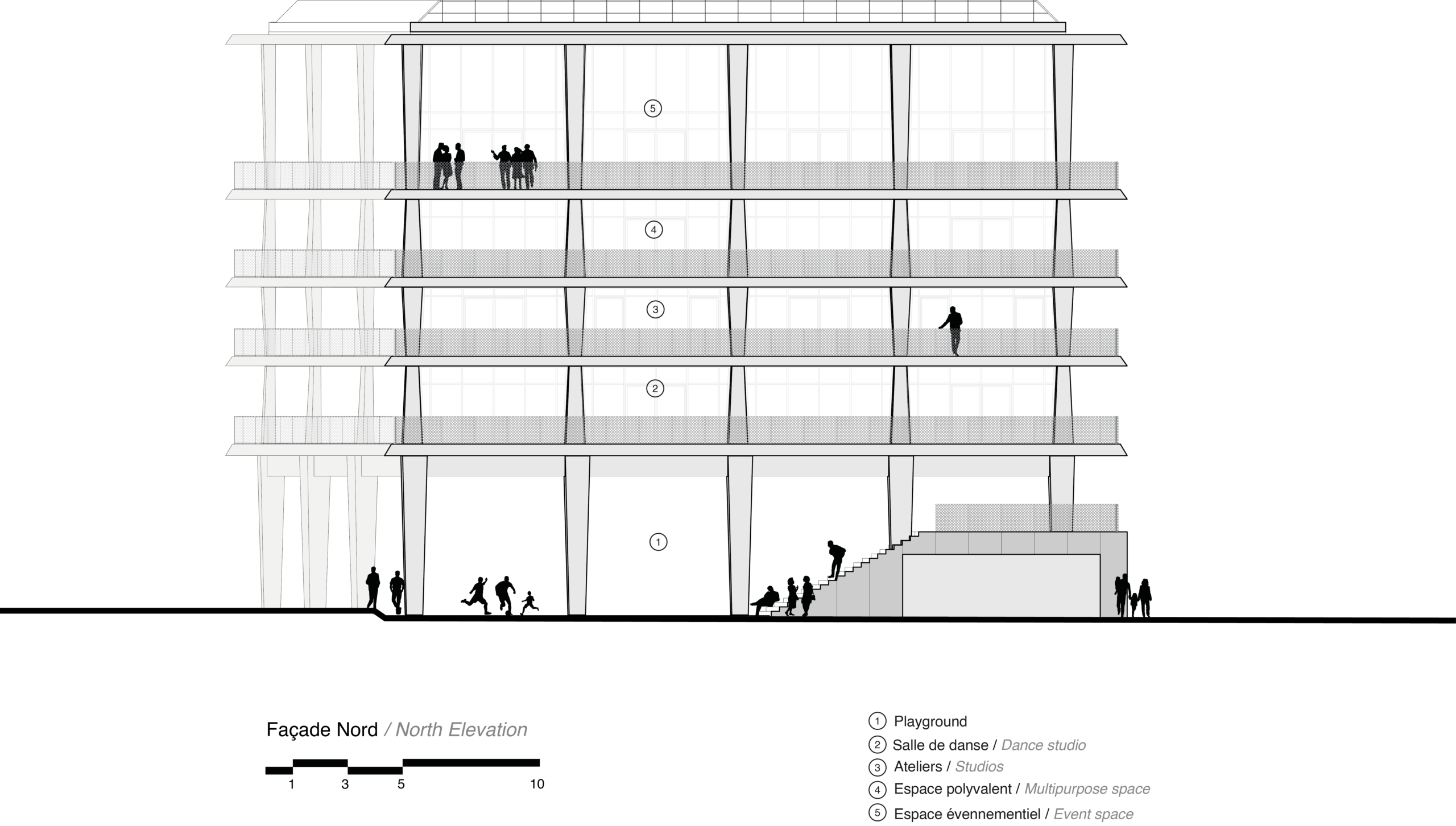
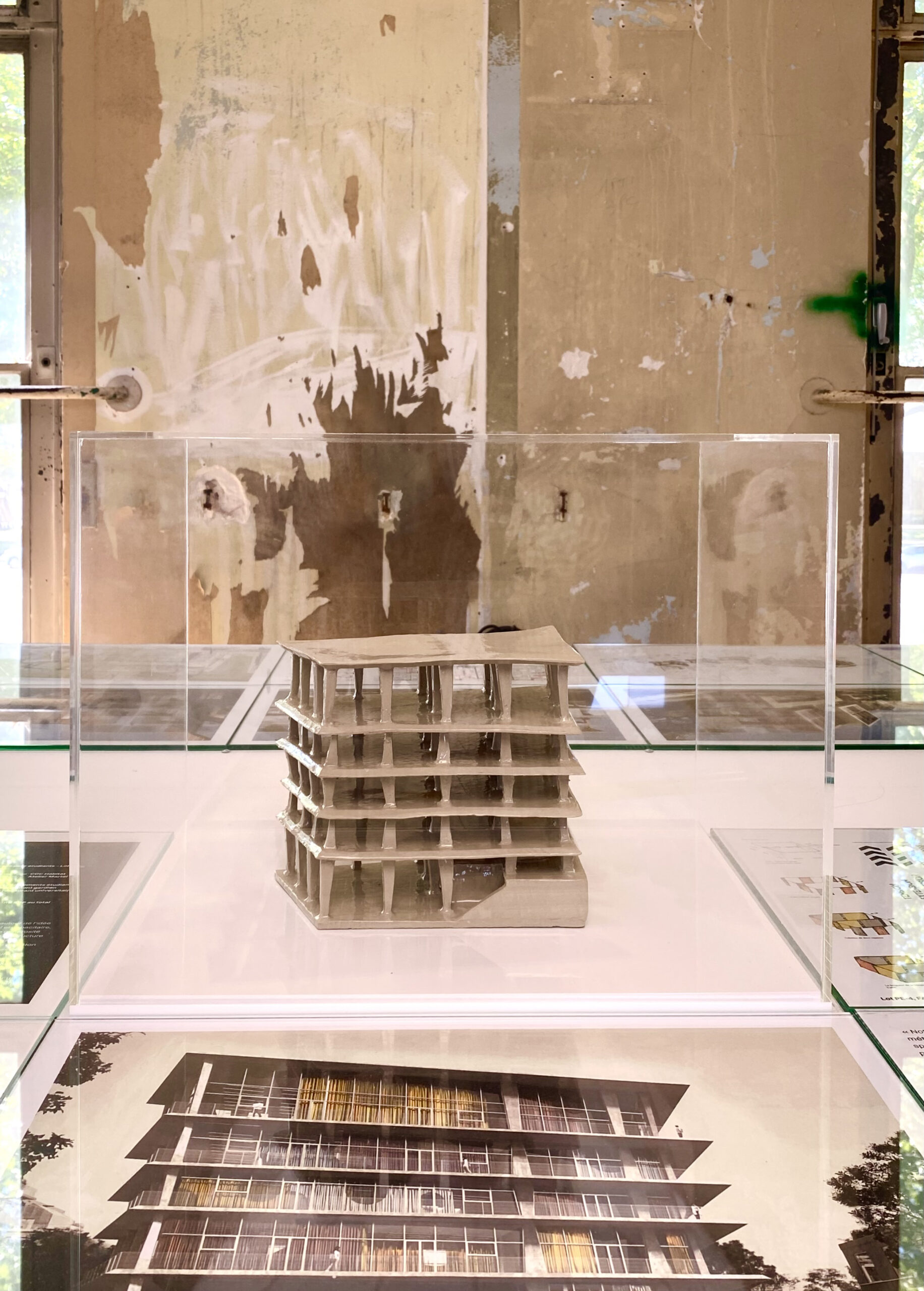
The Olympic Games (which will happen quite soon thus stimulating the general process of realization) have strongly inspired our architectural conception, which is always fed by strong allegories. Above all, the building must lend itself to a capacity for reception and mutability, for possible transformations and versatility. A space “capable” of adapting to future uses, through a form of purity and simplicity. Our design is based on the body metaphor of sports postures and is a blueprint that can be summarised by these three words: compression, tension and extension. Compression, because much like for a sportsman at the beginning of a race, a building must be well put down, rooted with all its weight in a concentration of energy ensuring its stability and balance. This implies working on gravity and dealing with the distribution of weights. The Urban Arts Centre is set on a base that is open to the outside, welcoming and highly permeable, and opens onto the Place des Arts, a circulation space that is an extension of it and can be used for events. What surrounds the ground floor around the evolution space is made of a stainless-steel mesh that can be retracted onto the square and completely opened. Sculpted load-bearing posts support the free-standing floors, stretched to their limits, which appear to float. The concrete is of a natural, grey and raw colour. Similarly, the notion of tension concerns the athlete as much as the construction: pulling the metals of the frames to contract them upwards allows the stabilisation of the weights… The extension is to be taken here in a more symbolic sense: it represents the imagination and the field of possibilities of all the cultural activities that will be developed in the future.
Five free, reversible and modular free-standing floors
The construction of the Olympic village involves two distinct stages. We foresee a possible reversibility of the project between its two phases, the Olympic Games and the Urban Arts Centre. Its functional organisation, facades, distribution and exterior spaces remain unchanged. In the Olympics phase, all the spaces can be used as accommodation, depending on the needs of Paris 2024 during the event. On the ground floor + 2, the largest space will be used as office space. The roof, which is inaccessible, will only be used for the production of renewable solar energy. During the Urban Arts Centre phase, the building’s programme will be put in place for good.
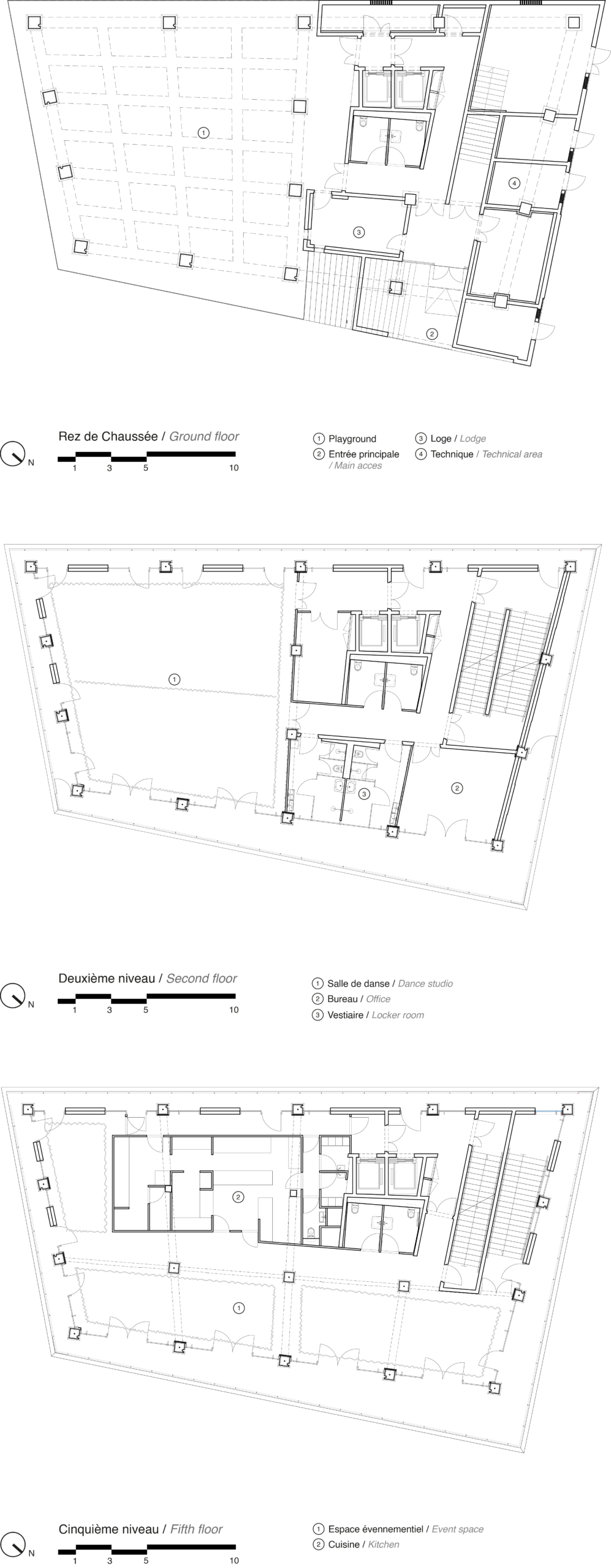
Modelled on the ground floor, which is freely accessible and can accommodate all forms of free activities (e.g., a forum), with the possibility of a stage, the upper floors, which play on different heights, are intended as extensions of the public space below, thanks to their large openings. The upper floors are subject to access controls and are closed to the public. They have a separate entrance, independent of the playground. On the first floor, there is a multi-purpose sports area mainly dedicated to urban dance (breakdance), with vertical circulation on each side. Floor 2 houses eight studios and workshops ranging from 22 to 40 sq. m., accessible by a space facing north onto the square. These are workplaces for artists, sportsmen and women, or project leaders – creative, cultural, event-based – in residence, and for people housed at the Urban Arts Centre. These are reversible and modular spaces. The multi-purpose room on level 3 is dedicated to the reception of groups, the promotion of events and of various activities. The fourth level is a festive space dedicated to catering. It can be privatised by the various people involved in the Urban Arts Centre.
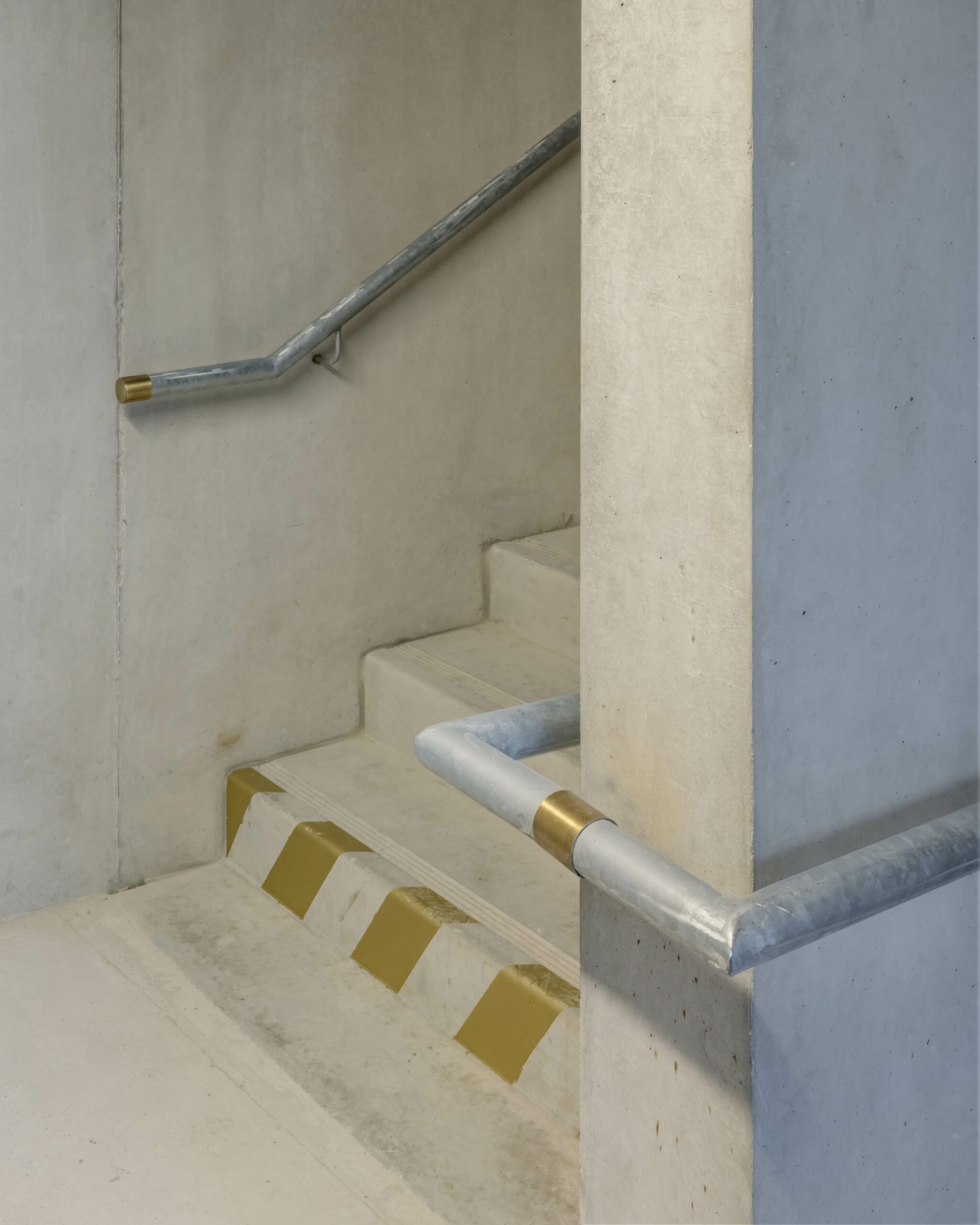
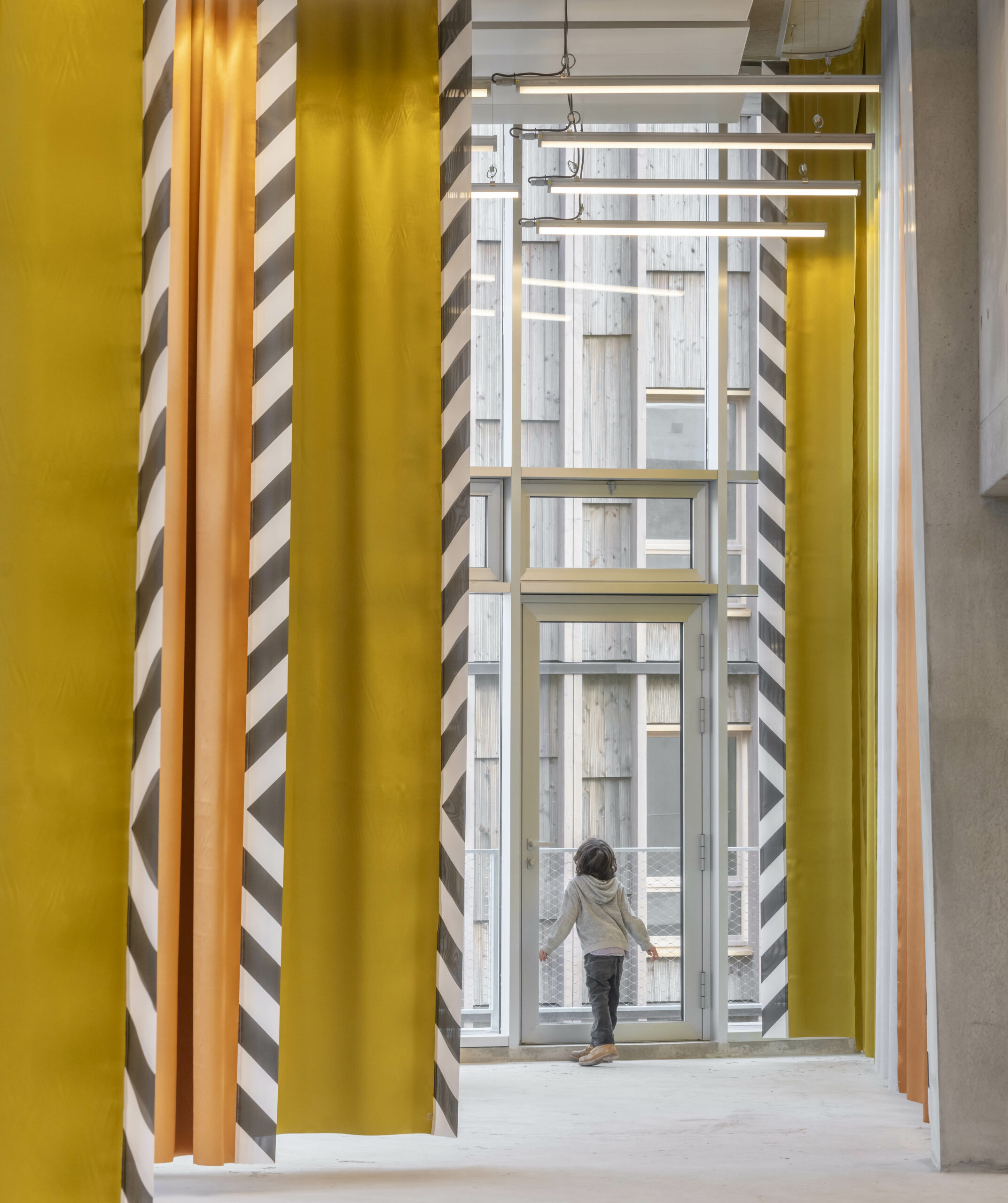
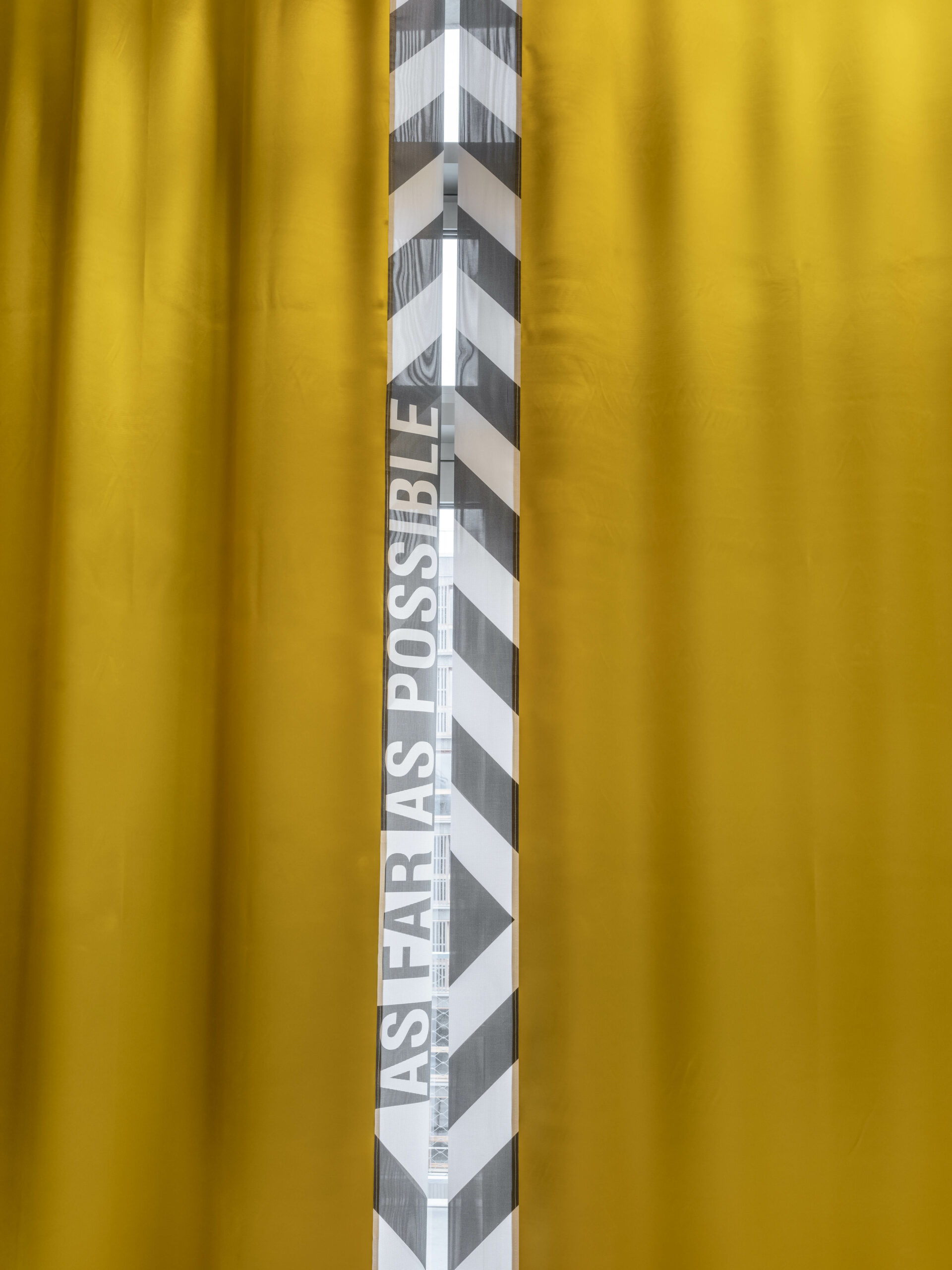
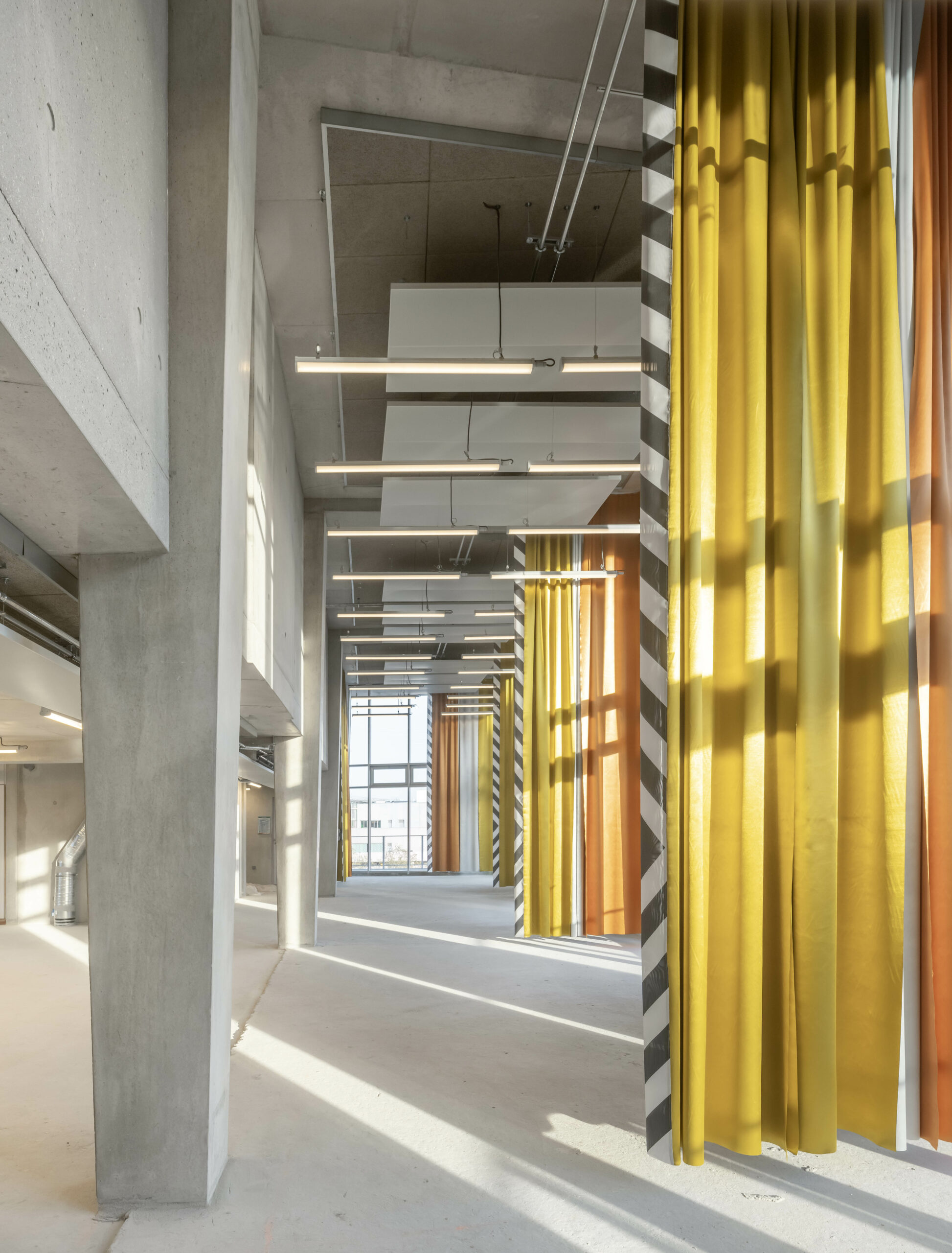
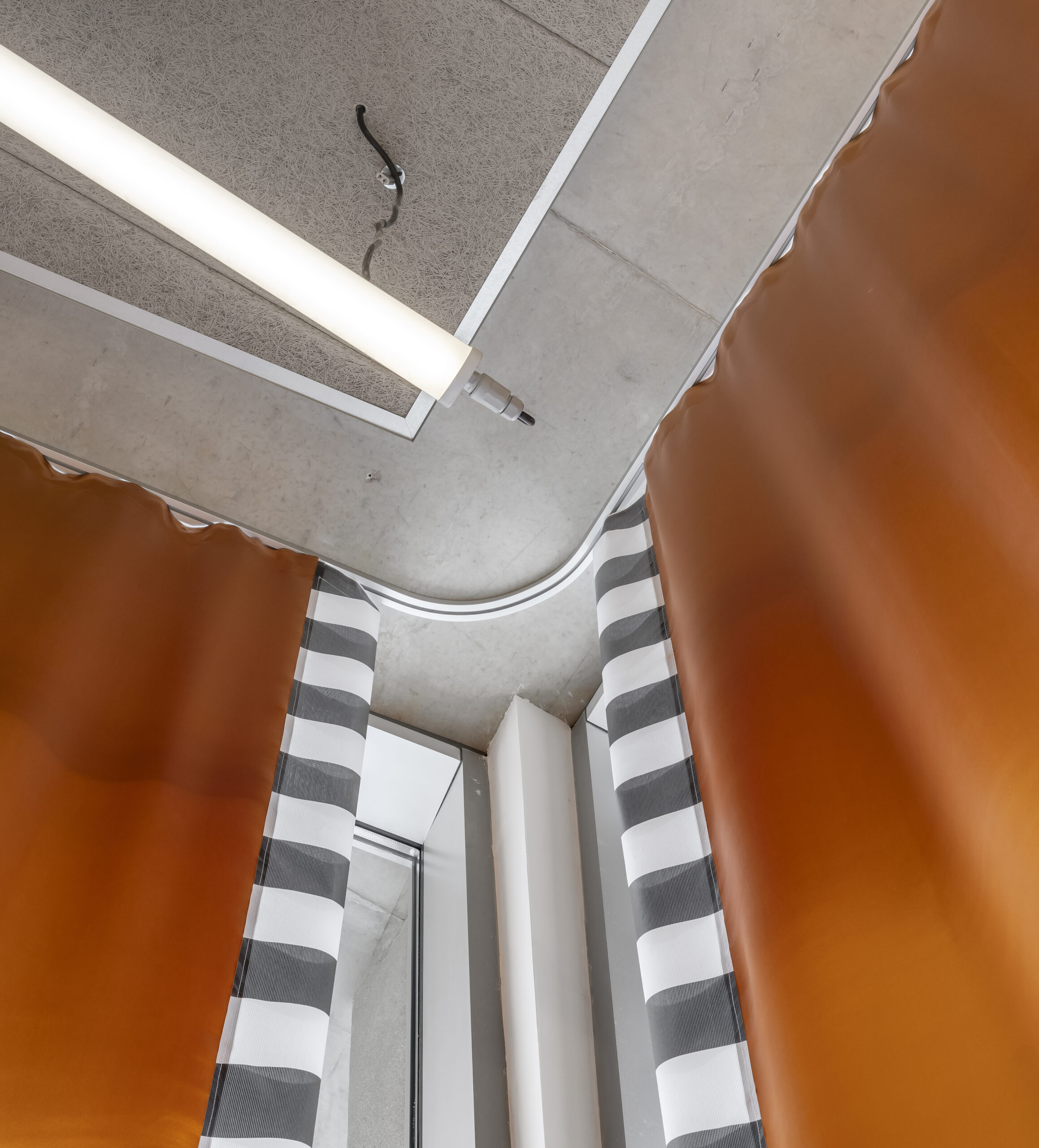
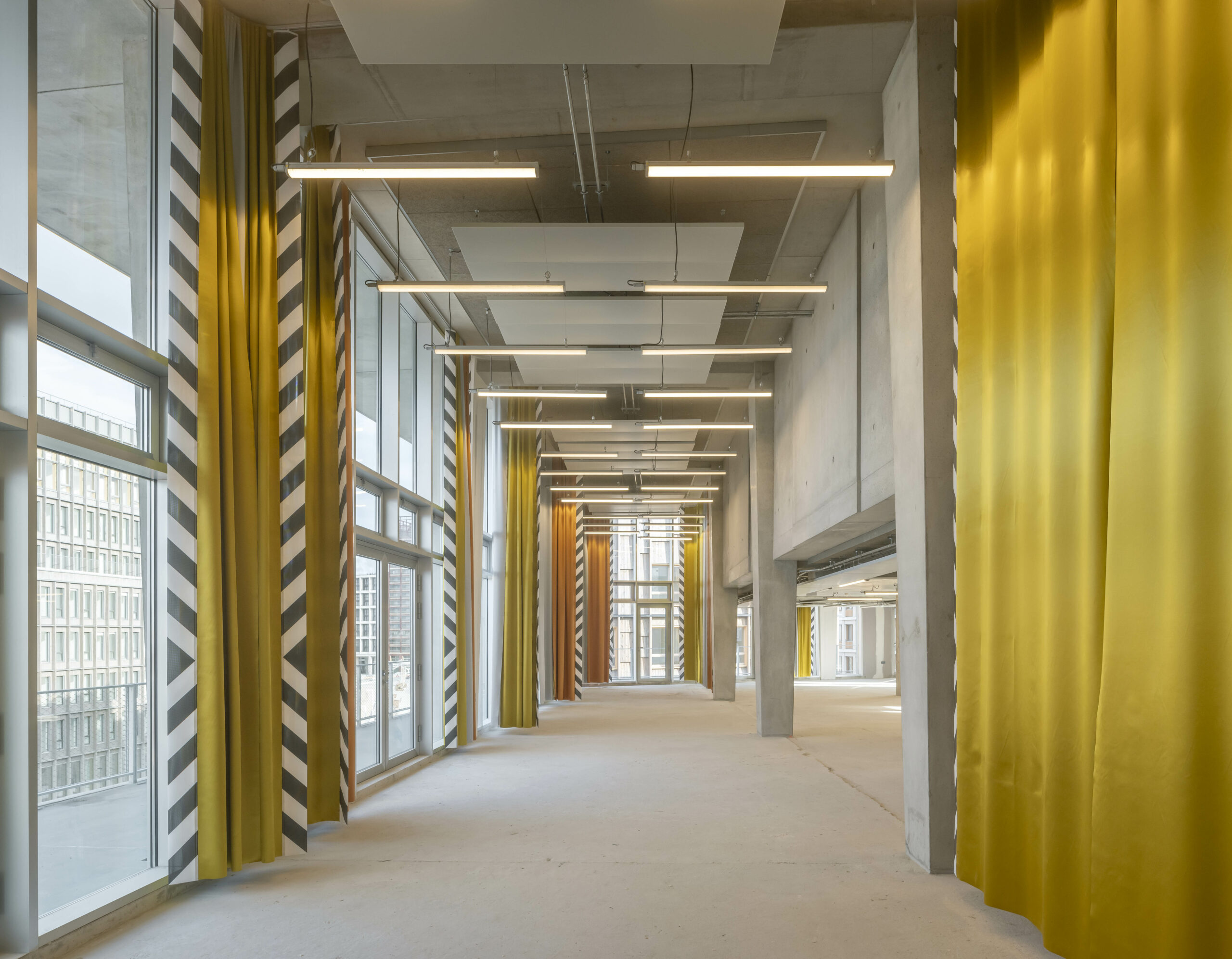
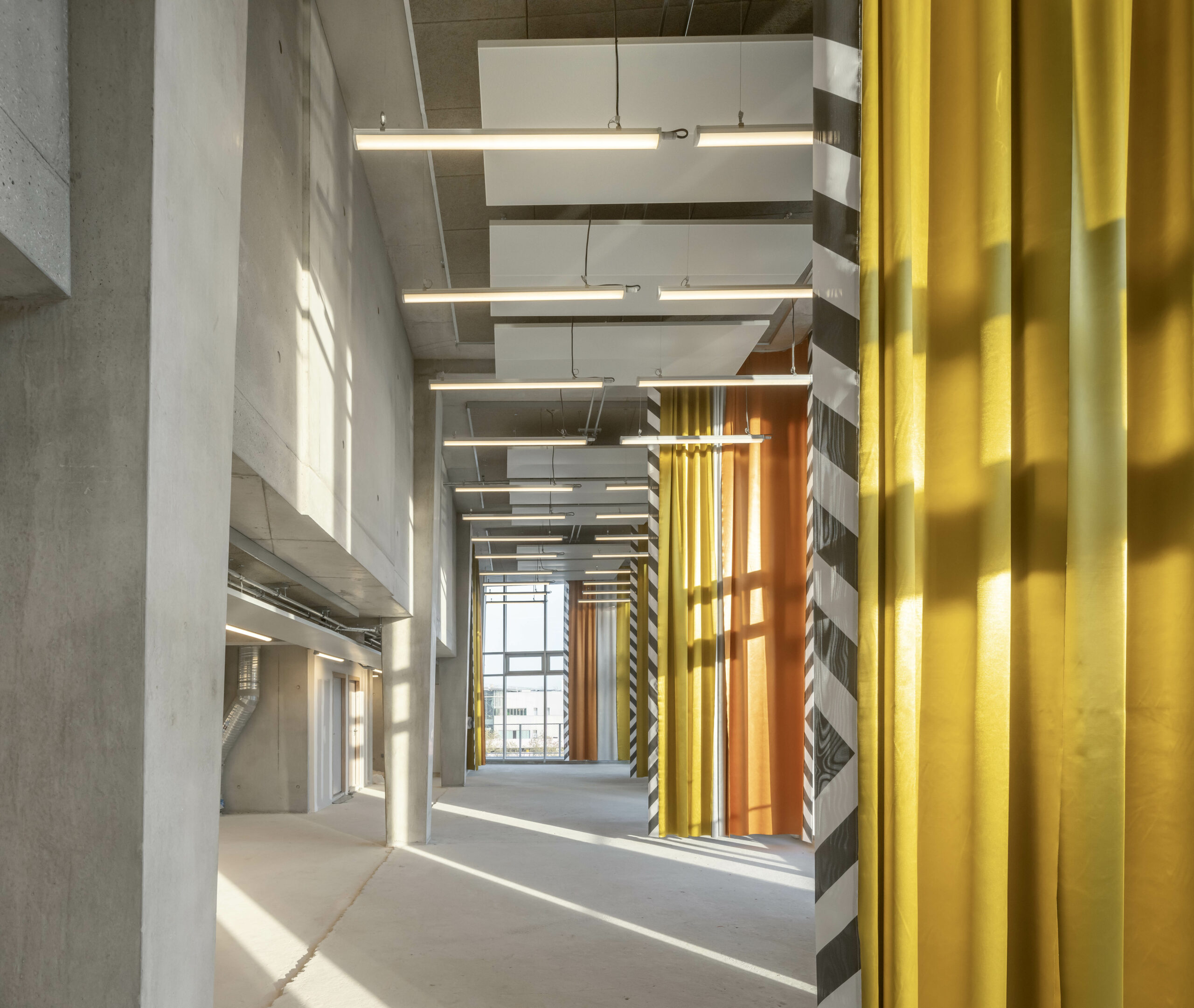
On all floors, there will be large curtains in different colours, Gold, Silver and Bronze, in reference to Olympic medals. This system serves as a blackout and as a separation, as well as a thermal and sound insulator. It allows the spaces to be modulated and to play on the lights and on their reflections. Within a rough concrete structure, this coloured stylisation, both decorative and functional, will significantly sign the identity and general aesthetics of the building, which will open in April 2022.
“Our design is informed by the physical metaphor of athletic posture, following a structural logic that can be summarized in three words: compression, tension, and extension…”
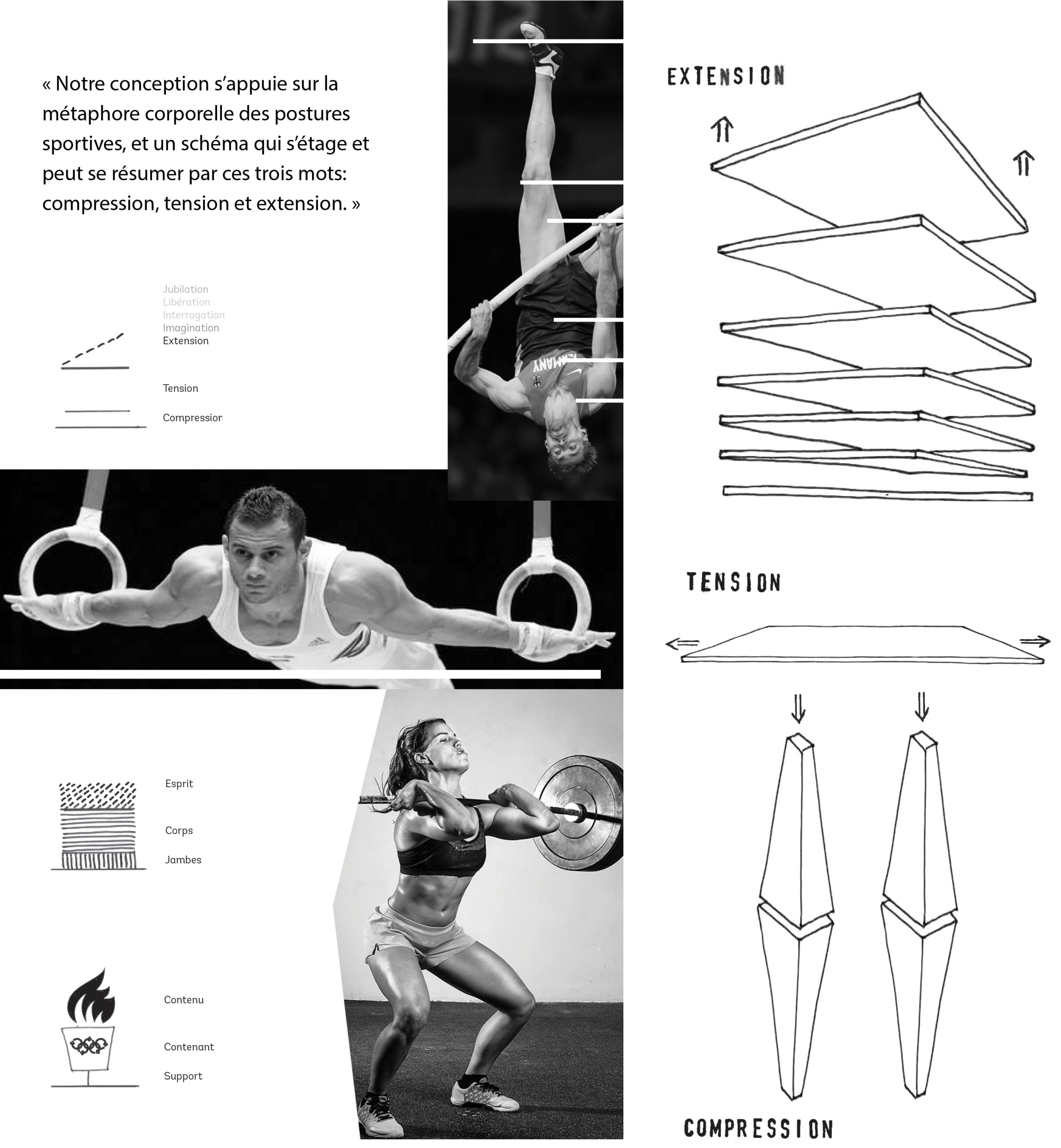
“…Compression, because much like an athlete at the starting blocks, a building must be firmly grounded—rooted by its own mass in a concentration of energy that ensures stability and balance. This involves a deliberate mastery of gravity and load distribution. The notion of tension applies as much to the athlete as it does to the construction: drawing the metal reinforcement upward to stabilize the weight through contraction. Finally, extension is used here in a more symbolic sense: it represents the imaginative reach and the field of possibilities for the diverse cultural activities that will unfold here in the future.”
LOCATION
île Saint-Denis (France)
CLIENTS
SOLIDEO - VILLAGE DES ATHLÈTES PICHET + LEGENDRE IMMOBILIER
FINANCING
SOLIDEO+ PICHET IMMOBILIER + LEGENDRE IMMOBILIER
OPERATOR
CNEAI
ARCHITECT
FARIDAZIB
PROJECT MANAGER
MARINE FAYOLLAS
Assistant project manager
DHOUHA HAMDI, ANDREA PORCAI, CLAUDIO PANTANO, ISABELLE PINSOLLE
BUILDING ECONOMY
ÉCOTECH
STRUCTURAL ENGINEERING
ARCADIS
TECHNICAL INGINEERING
ARCADIS
KITCHEN ENGINEERING
OMNIS RESTAURATION
ACOUSTIC
SCOPING
GEOMETER
AUGE
TECHNICAL CONTROL
BTP CONSULTANTS
SECURITY COORDINATOR
BUREAU VERITAS
RENDERING
CLAUDIO PANTANO, TIJANI LOUSSAEIF
PHOTOGRAPHY
LUC BOEGLY
SURFACE
1470 sqm
COST
4.8 M€
COMPETITION
2020 WINNER
COMPLETION OLYMPIC GAMES PARIS 2024
2024
COMPLETION ART CENTER
2026
AWARDS
EQUERRE D'ARGENT 2024, NOMINEE
STRUCTURAL WORK, CONCRETE FACADE, SCREEDS
LEGENDRE CONSTRUCTION
FACADE, EXTERNAL JOINERY
BALIN BAT
ROOFING, WATERPROOFING
MCE
MSD
ELECTRICITY (HEAVY & LIGHT CURRENT)
FINÉLÉC
INTERIOR WORKS
SGPI
INTERIOR JOINERY
ETMB
PAINTING WORKS, WALL GRAPHICS
SPRAS
DRAPERY
LILY LATIFI
HARD FINISHES
SPERY